 Skip to content

Soft Search Loans in the UK: Eligibility and Credit Impact
A loan check can leave your credit score untouched, while the next step may leave a mark. In the UK, a soft search won’t affect your score, while a formal application may involve a hard search. MoneyHelper’s guidance describes soft searches as checks that don’t affect your credit rating. Its guide to checking your credit report explains how to review the information lenders may use. MoneyHelper sums it up: “Soft searches don’t affect your credit rating.”
It’s understandable to want an idea of your options before making a full application. A soft search can indicate whether you may qualify, but it isn’t a loan offer or approval. The lender makes the final decision after further checks. Before sharing personal details with a comparison service, read its privacy information and use the FCA Register to check the firm’s status.
This guide to soft search loans in the UK explains how soft and hard searches differ, when each may happen, and what lenders consider when assessing eligibility and borrowing limits. You’ll also learn why an eligibility result is only an early guide, so you can understand the process before deciding whether to apply.
Key Takeaways
- Separate an initial eligibility check from a formal application so you understand when a credit search may affect your score.
- Review your credit report for errors and keep your address details up to date before applying.
- Think of any borrowing limit as an assessment, not a target; choose repayments that fit your budget.
- Compare the loan’s interest rate and total repayment, as well as the monthly payment, before deciding whether to proceed.
Do soft search loans affect your credit score?
In the UK, a soft search for a loan doesn’t affect your credit score, and other lenders can’t see it. A match isn’t approval or a guarantee of the advertised interest rate: the lender decides after further checks.
Eligibility checker benefits and limits
An eligibility checker can show whether you may qualify before you make a full application. It can help you explore options without a soft search changing your credit rating. Check what the result actually tells you: a possible match isn’t a confirmed loan, and it doesn’t lock in an interest rate or monthly repayments. For example, a checker might indicate a personal loan could suit your details, but the lender still assesses your application.
How eligibility checks work
Start by entering the information the checker requests. This may include your personal details, income, regular outgoings, existing credit commitments and the amount you want to borrow. Lenders use these details to assess eligibility and whether repayments appear affordable. Your credit history, including credit cards or missed payments, may also affect the result. Give accurate information: an incorrect income or address could make a match less useful. The result is an indication, not a final decision or confirmed offer.
Credit score effects
A soft search is an initial look at your credit report, rather than the fuller check associated with a formal application. Checking eligibility, reviewing your own report or completing an identity check can involve a soft search. By contrast, lenders may make a hard search when you formally apply, and this can affect your score. Several hard searches from loan applications may also harm your rating. A hard search usually stays on your credit file for 12 months, but can remain for up to 2 years. Keep applications focused, and use an eligibility check before applying.
Credit history and improving a credit score
Credit history helps lenders assess risk, but a soft-search result can’t guarantee approval. A soft-search feature doesn’t by itself prove that a comparison site is safe or regulated. Identify the firm and read its privacy information before sharing personal details.
Credit scores and loan approval
Lenders consider your credit report alongside your income, regular spending and existing borrowing. A report may show credit cards, missed or late payments, financial links and relevant public records. These details help lenders assess whether repayments appear manageable, rather than relying on one score alone. A weaker history can make approval harder, but it doesn’t explain every lending decision. Bad-credit loans usually have higher interest rates and lower borrowing limits, so consider affordability as well as the possibility of approval.
How soft credit searches work
A soft credit search gives an initial view of your credit file and may appear when you check your own report or use an eligibility checker. It doesn’t affect your score, and other lenders can’t see it. The UK’s three main credit reference agencies are Experian, Equifax and TransUnion. Reviewing reports with them can help you spot incorrect account details or payment records. Correcting errors may give lenders a more accurate picture of your history.
To strengthen your profile, check your reports for mistakes, pay bills on time and keep credit card balances manageable. Registering on the electoral roll at your current address can also help lenders verify your details. If you have bad credit, use an eligibility checker before making a formal application. Treat the result as an indication, not a promise: the lender still reviews your information and decides whether to offer a loan.
Personal loan amounts and borrowing limits
In the UK, personal loans typically range from £1,000 to £25,000, although some providers offer up to £50,000. Your income, existing commitments and credit report can influence how much a lender is willing to offer. A soft search for loans in the UK can indicate a possible amount, but it isn’t a confirmed borrowing limit.
Check the repayment period as well as the amount. Personal loan terms usually run from one to 10 years. A longer term can reduce monthly repayments, but may increase the total amount repaid. Your credit history and affordability also shape the interest rate offered. A representative APR must be offered to 51% of accepted applicants; others will usually receive a higher rate.
It states a fixed annual interest rate of 59.97%. This is an example, not a quote for your circumstances. Compare the total repayment and monthly amount before applying, not just the advertised rate.
Before making applications, consider the requirements lenders may assess. Applicants typically need to be at least 18, and a loan application may require three years of UK address history. Lenders also review income, regular outgoings and current borrowing to assess affordability. If your credit history is poor, bad-credit loans usually come with higher interest rates and lower borrowing limits. Soft-search loan options in the UK can help you explore possible eligibility before applying. Avoid borrowing more than your budget can comfortably repay, since missed payments can affect your credit file. If you are exploring ways to handle major fixed commitments such as housing fees, looking at flexible payment platforms like gorentify.com can offer insight into how spreading large lump-sum costs into manageable instalments can ease monthly cash flow.
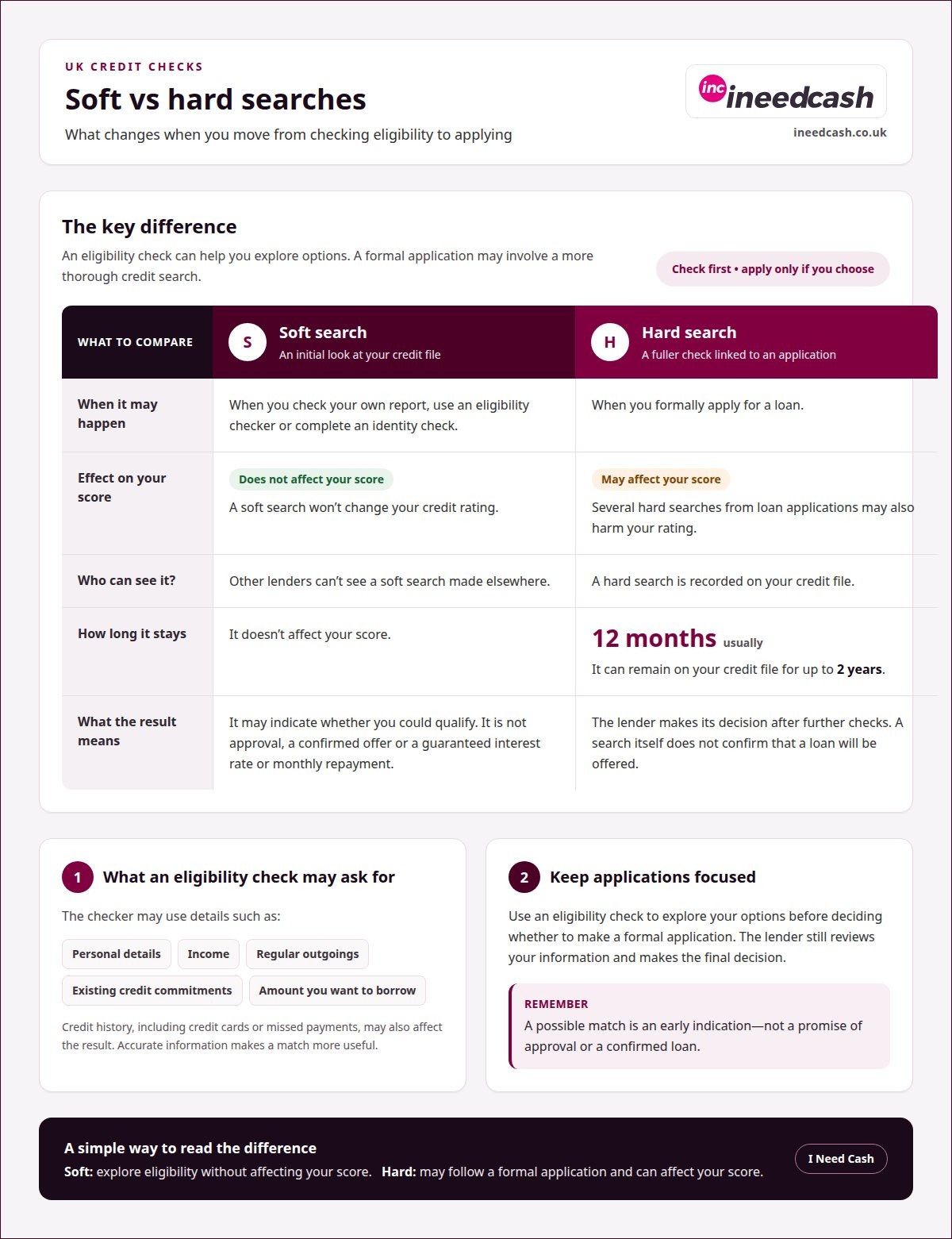
How soft searches differ from hard searches
Soft searches help you explore eligibility; hard searches usually follow a formal application. Lenders can’t see soft searches made elsewhere when assessing your application.
Comparing soft and hard searches
A soft search is an initial review of your credit file. It can indicate whether a personal loan may suit your circumstances without affecting your credit score. Use the result to decide whether to continue with an application.
A hard search is a more thorough credit check and may happen when you formally apply. It can affect your credit score, especially if you make several applications close together. Unlike an eligibility check, it records a lender’s review linked to a specific application.
Compare the loan terms after an offer, not just the initial match. Check the interest rate, total repayment and monthly payments before accepting. A soft-search indication doesn’t guarantee the final terms.
Soft search visibility to lenders
Other lenders can’t see a soft search when they review your credit file. Checking eligibility with one lender therefore doesn’t show another lender that you explored that option. Your own report may still show soft searches, depending on the check.
A hard search linked to a personal loan application is different: lenders can see it on your file. Hard searches usually remain for 12 months, but can stay for up to 2 years. Several applications may therefore signal repeated borrowing attempts.
Keep the steps distinct: use a soft search to compare possible options, then submit a formal application only when you’re ready. The lender may make a hard search at that stage. It assesses your application and decides whether to offer a loan and on what terms.
I Need Cash
I Need Cash is a UK credit broker that helps people explore borrowing options by connecting applicants with independent lenders. If you’ve used a soft search and want to consider your next step, I Need Cash can help you explore relevant types of finance. A soft-search result remains an indication, not a loan offer or approval.
The aim is to make it easier to explore potential matches without treating an eligibility result as a final decision. Lenders make their own assessments, including checks on affordability and credit history. Before moving from an initial search to a formal application, be clear about the amount you need and the monthly repayments your budget can manage.
I Need Cash offers Personal Loans, Short Term Loans, Bad Credit Loans and Homeowner Loans. These options suit different borrowing needs, and the right category depends on your circumstances and purpose. For example, someone with a poor credit history may consider Bad Credit Loans. If you’re considering a loan secured against your home, understand the risk: failing to repay it can put your home at risk.
Keep the key distinction in mind: a soft search can help you explore eligibility, but it doesn’t confirm acceptance or fix an interest rate. When reviewing an option, look beyond the amount offered. Consider the repayment schedule, total amount repayable and whether payments will remain manageable alongside existing commitments.
If you’re ready to discuss your borrowing needs and explore the available options, contact I Need Cash.
Frequently Asked Questions
What is a loan eligibility checker?
A loan eligibility checker gives an early indication of whether a lender’s criteria might fit your circumstances. It can help you decide whether to keep exploring a loan before submitting a full application. For a useful result, enter accurate details about your income, regular spending and existing borrowing. Treat the outcome as a guide, not a decision from the lender.
How can I get approved for a loan?
No single step guarantees approval. Lenders assess information such as income, regular outgoings, current credit commitments and payment history to judge affordability and suitability. Before applying, work out the monthly repayment you could manage alongside essential bills. Provide consistent, accurate information and avoid applying for several loans at once, as multiple hard searches can affect your credit rating.
How much can I borrow?
The amount depends on the lender’s criteria and your ability to afford repayments. UK personal loans typically range from £1,000 to £25,000, with some providers offering up to £50,000. A lender’s maximum isn’t a recommendation to borrow that much. Consider the total repayment and whether the monthly payment fits your budget, especially if your income or regular expenses change.
When does a hard search happen?
A hard search commonly happens when you formally apply for credit. A lender may also carry one out after making an offer, before deciding whether to proceed. Check the application stages so you know when a full credit check could occur. If you’re still exploring, an eligibility checker can help you decide whether to consider a formal application.
Can I get a loan with bad credit?
Bad credit doesn’t automatically rule out borrowing, but it can affect the options available. Lenders consider your wider circumstances, including income, existing commitments and how you’ve managed credit. Bad-credit loans usually have higher interest rates and lower borrowing limits than other loans. Before accepting an offer, check that the repayment schedule is affordable and review the total amount repayable.
Can I get a loan with only a soft search?
No. A soft search alone doesn’t approve or provide a loan. It can indicate whether you might fit a lender’s criteria, but the lender makes its decision after further checks. A formal application or a later stage in the process can involve a hard search. Read the loan terms carefully and consider affordability before agreeing to repayments.

Article by
Mandy Paige
Social Content Writer and Blogger
Mandy has been writing for various website for a number of years, especially for companies in the consumer finance industry. She started her career guiding customers wanting help when applying for finance at a Loan Brokerage. Speaking to individuals wanting guidance, it lead her to start writing help and guidance on finding the right solution for their needs. Outside of writing, she is a wiz with a pair of scissors as she originally trained as a hairdresser.
Disclaimer
The content of this article/blog was correct to our knowledge on the date/time it was published.