 Skip to content

Can I Get a Loan with an IVA? Understand Limits and Permission
- Michelle
- Finance
An IVA doesn’t automatically rule out borrowing, but it does put clear limits on it. Whether you can get a loan with an IVA depends on permission from your insolvency practitioner: in England, Wales and Northern Ireland, you need permission to borrow more than £500 during the arrangement. An IVA can also stay on your credit file for six years from the date it starts, making it harder to qualify.
It’s understandable to worry that missed payments, defaults or a CCJ have closed off every option. Before applying for a loan during an IVA, speak to your insolvency practitioner and get any required permission. They will consider why you need to borrow, how long repayment would take and whether you can afford the payments alongside your IVA contributions. Taking on credit without required consent could put your arrangement at risk.
This guide explains how an IVA affects loan eligibility, what the borrowing limit means and when permission is needed. It also covers personal loan options and what missed payments, defaults or CCJs may mean for your choices, so you can understand the next step before taking on more debt.
Key Takeaways
- Understand why an IVA can make lenders cautious and what that may mean for your borrowing options.
- Before considering new credit, be ready to explain its purpose, affordability and repayment plan to your Insolvency Practitioner.
- Learn how missed payments, defaults and CCJs can affect loan choices, and why secured borrowing carries extra risk.
- Explore when a personal loan or another borrowing option may be relevant, and what to consider before applying.
How an IVA affects credit scores and loan eligibility
An IVA can make borrowing harder because lenders can see it on your credit file and will assess whether you can afford repayments alongside your existing commitments.
IVA effects on credit files
An IVA can affect your credit score and borrowing eligibility. It stays on a UK credit file for six years from its start date. MoneyHelper describes an IVA as “a formal agreement between you and your creditors to pay back your debts over a period of time” in its IVA guidance. Lenders may also consider defaults recorded on debts included in the arrangement.
Restrictions on new credit
New credit can include unsecured loans, credit cards and overdrafts, as well as money borrowed from family or friends. In England, Wales and Northern Ireland, permission is required to borrow more than £500. Even below that amount, consider whether a new repayment could squeeze your budget. The GOV.UK IVA information explains the formal arrangement and its effect on debts.
Consent for borrowing during an IVA
Before applying, ask your insolvency practitioner for consent and provide the loan purpose, amount, repayment plan and budget. They will consider whether borrowing is necessary, how long repayment would take and whether the payments are affordable alongside your IVA contributions. These details also help show whether new credit could disrupt your arrangement.
Loan options and alternatives
Mainstream high street lenders rarely consider applications from people currently in an IVA, while specialist lenders commonly handle these cases through intermediaries. Before borrowing, consider whether you could postpone a non-essential purchase or adjust your budget instead. Interest rates and fees depend on the lender’s assessment and your circumstances. After completing an IVA, you can apply for a loan, but lenders will still assess your application and credit history.
Borrowing limits and permission from an insolvency practitioner
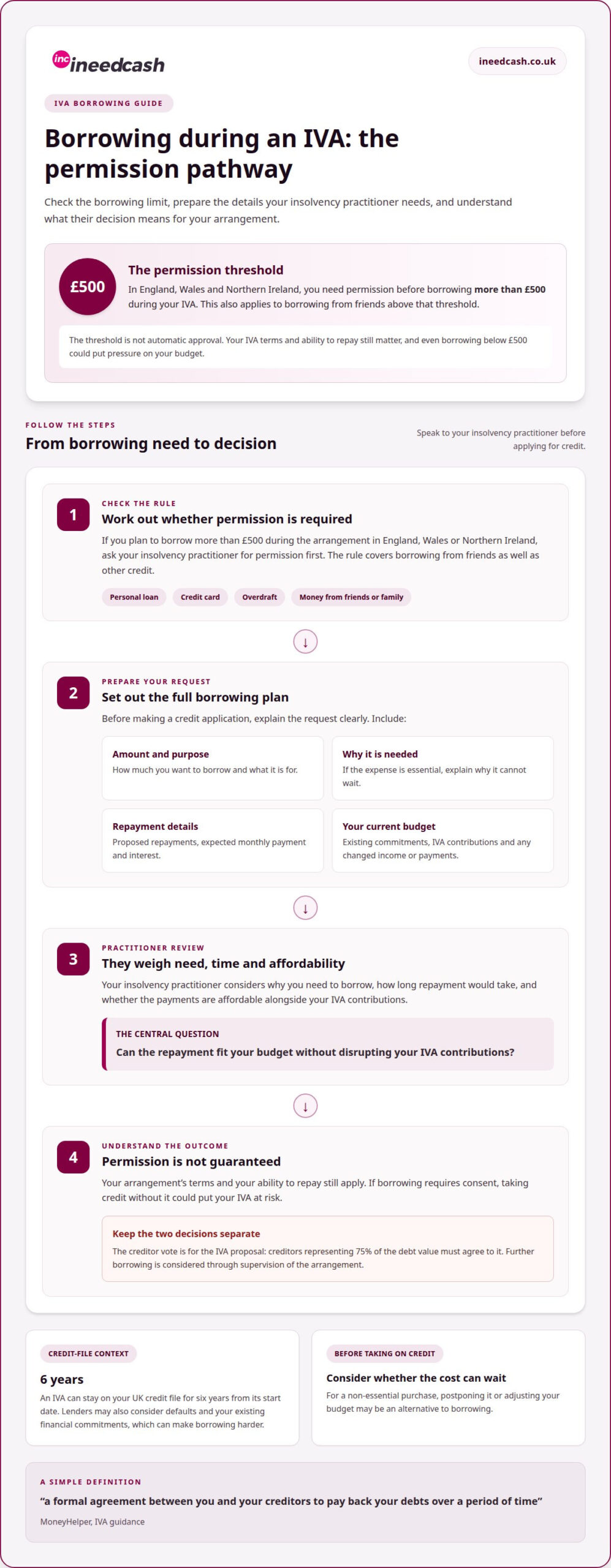
In England, Wales and Northern Ireland, your insolvency practitioner’s permission is needed before borrowing more than £500 during an IVA. Borrowing from friends above that threshold also requires the IVA supervisor’s consent. The limit is not automatic approval: your arrangement’s terms and your ability to repay still matter.
What to include in a permission request
Before making a credit application, explain the amount, purpose and proposed repayments to your insolvency practitioner. For example, if an unexpected essential expense leads you to consider borrowing, set out why it cannot wait and how you would repay the loan. Include the expected monthly payment, interest and your existing commitments. This gives your practitioner a clearer picture of the request and its effect on your budget.
How approval affects your arrangement
The practitioner weighs necessity, repayment time and affordability alongside your IVA contributions. Permission to borrow is separate from the creditor vote: creditors representing 75% of the debt value must agree to the IVA proposal, while further borrowing is considered through the arrangement’s supervision. If payments or income have changed, explain that in your request rather than relying on an old budget. Borrowing without required consent can put your IVA at risk. If you’re weighing up your next move, explore the available next steps before taking on credit.
Loans for people with missed payments, defaults or CCJs
Missed payments, defaults and County Court Judgments (CCJs) can limit your borrowing options during an individual voluntary arrangement (IVA). Secured and unsecured credit carry different risks, so check your agreement’s permission requirements and consider the repayments carefully before borrowing.
Secured loans and mortgages
A secured loan or mortgage is linked to an asset, often your home, which could be at risk if you fall behind on payments. In England, mortgages and secured loans usually cannot be included in an IVA unless the lender agrees, and lenders do not usually agree. As a result, these payments may sit outside your IVA contributions. If you miss secured loan payments, your property could face repossession independently of those contributions. Adding a charge against your home makes it especially important to weigh the consequences before borrowing.
Unsecured borrowing during an IVA
An unsecured personal loan does not use your home as security, but it still adds repayments and interest. During an IVA, get any required permission before taking out further credit, including a personal loan or credit card. A lender will consider your income, existing payments and credit history. An IVA, missed payments or defaults can make approval harder, and an advertised interest rate may differ from the rate offered to you.
For example, an unpaid CCJ can remain on your UK credit record for six years if you do not pay it in full within a month. Lenders may consider this record alongside defaults and your current financial commitments when assessing a later application. Before applying, identify the problem you need to solve and consider whether a new payment fits your budget and IVA agreement. If you’re already struggling with secured payments, tell your insolvency practitioner promptly. Taking on credit without required consent could breach your arrangement, while missed secured payments can put your property at risk.
Getting a personal loan while under an IVA
Taking out a personal loan during an individual voluntary arrangement requires careful planning. Mainstream high street lenders rarely consider applications from people currently in an IVA, while specialist lenders commonly handle these cases through intermediaries. Before starting an application, explain why you need the money and how repayments could fit your monthly budget.
Prepare the details for your request
Give your insolvency practitioner the loan purpose, amount, repayment period and expected monthly payment. They will consider whether borrowing is necessary, how long repayment would take and whether you can afford it alongside IVA payments. For example, explain why an essential replacement is different from a purchase you could postpone. Include any changes to your income or existing commitments so the affordability picture is up to date.
Assess any offer carefully
A lender assesses your application separately from your practitioner’s decision. An IVA and defaults on included debts may make approval harder, and any offer will depend on your circumstances. Review the full repayment terms and interest before accepting. With a secured loan, missed repayments put the asset used as security at risk, so weigh that consequence against the monthly cost.
Keep the arrangement central
Only proceed once required permission is in place and you understand the commitment. If a personal loan is declined, avoid repeated applications without reconsidering the need and affordability. To explore personal loan options, start an application, while keeping your IVA commitments and practitioner’s decision central to your plans.
I Need Cash
I Need Cash is a UK credit broker that helps people explore borrowing options through a panel of independent lenders. It matches applicants with potential financial products but is not a direct lender. If you’re considering a loan during an IVA, first understand your arrangement’s borrowing rules and get any required permission before applying.
The right borrowing option depends on your purpose and repayment plan. A Personal Loan may suit a planned expense, while a Short Term Loan is intended for a shorter borrowing need. Bad Credit Loans may be relevant if missed payments, defaults or a CCJ affect your credit history. In every case, a lender will assess your application and ability to repay.
Homeowner Loans are secured against a property, so missed repayments can put your home at risk. Consider the security and repayment commitment carefully alongside your IVA contributions. Whichever product you explore, include the full repayment in your budget, and remember that an initial match is not confirmation of approval. Any required permission from your insolvency practitioner is a separate part of borrowing during an IVA.
I Need Cash can help you explore these borrowing categories through its lender network, including if you’re reviewing options after credit problems. Share accurate details about your income, existing commitments and IVA, and consider whether the borrowing is necessary before you proceed. If repayments would make your arrangement unaffordable, taking on more credit may not be the right next step. For a straightforward discussion of your options, contact I Need Cash.
Choose your next step with care
If you’re asking, “Can I get a loan with an IVA?”, focus on the decision you need to make next, not just the application. Consider whether the expense can wait, how a new repayment would affect your monthly budget and whether borrowing offers a lasting solution. Clarifying your priorities can help you discuss the choice calmly and avoid taking on credit simply because it seems available.
Before moving forward, put your needs and repayment capacity first. If borrowing remains an option you want to explore, I Need Cash can help you consider available routes through its lender network. Share an accurate view of your circumstances and take time to understand any offer before deciding. Contact I Need Cash to discuss your options, and take the next step at a pace that feels right for you.
Frequently Asked Questions
How Does an IVA Affect You?
An IVA can affect your credit file and future borrowing, and in some cases your job or home. It is recorded on your UK credit file for six years from its start date, and lenders may consider it alongside defaults on included debts. For example, applying for a phone contract or other credit may involve an assessment of your credit history and ability to pay.
What credit can you take out on an IVA?
Credit can include personal loans, credit cards, overdrafts and money borrowed from family or friends. Before taking on any of these, review your IVA terms and speak to your insolvency practitioner about consent. Consider the full repayment commitment, not just whether a lender might accept your application. A new regular payment could leave less room in your budget for essential bills.
Can you get a loan while in an IVA in the UK?
It may be possible to get a loan with an IVA, but mainstream high street lenders rarely consider applications from people currently in one. Specialist lenders commonly handle these applications through intermediaries. Permission under your IVA and a lender’s decision are separate: receiving permission does not mean your loan will be approved. For example, a lender may assess your income and existing outgoings before deciding whether repayments are affordable.
What is the IVA borrowing limit without approval in the UK?
In England, Wales and Northern Ireland, you need your insolvency practitioner’s permission to borrow more than £500 during an IVA. The threshold also applies to borrowing from family or friends. Don’t treat an amount below the threshold as a reason to ignore your arrangement’s conditions: discuss proposed credit with your practitioner before applying, particularly if repayments could affect your ability to meet regular commitments.
What are the risks of taking out a loan during an IVA?
Borrowing without required permission can put your IVA at risk, while new repayments may make it harder to keep up with contributions and household bills. If you fall behind on IVA payments, you may face bankruptcy. A secured loan carries an additional risk: missed payments can put the property at risk of repossession. Weigh the loan’s purpose against these consequences before taking on further debt.
Which UK lenders offer loans to people with an IVA?
Specialist lenders commonly handle applications from people with an IVA through intermediaries, while mainstream high street lenders rarely consider them.

Article by
Mandy Paige
Social Content Writer and Blogger
Mandy has been writing for various website for a number of years, especially for companies in the consumer finance industry. She started her career guiding customers wanting help when applying for finance at a Loan Brokerage. Speaking to individuals wanting guidance, it lead her to start writing help and guidance on finding the right solution for their needs. Outside of writing, she is a wiz with a pair of scissors as she originally trained as a hairdresser.
Disclaimer
The content of this article/blog was correct to our knowledge on the date/time it was published.