 Skip to content

No guarantor loans in the UK for bad credit
- Michelle
- Finance
Bad credit doesn’t automatically rule out no-guarantor loans in the UK. A guarantor isn’t a regulatory requirement for bad-credit lending, but lenders still assess your creditworthiness and affordability. You’re solely responsible for repaying what you borrow.
It’s understandable to worry that a missed payment could close every door, or that applying might affect your credit file. Before applying, find out what lenders consider and whether an eligibility check uses a soft or hard search.
This guide explains how bad credit may affect your chances, what to know about credit checks, and how no-guarantor borrowing compares with guarantor loans and other options. It also covers payday and short-term loans, including when they may suit a small, temporary need and why you should check the repayment costs carefully.
Key Takeaways
- Checking your eligibility may help you explore borrowing options, and the effect on your credit record can depend on the type of search.
- Bad credit doesn’t automatically rule out borrowing, but lenders assess affordability and creditworthiness before deciding.
- Compare who is responsible for repayments, the term and the total cost before choosing between guarantor and no-guarantor borrowing.
- Short-term borrowing may suit a brief cash need, but consider whether the repayments fit your budget before applying.
Will checking my eligibility affect my credit score?
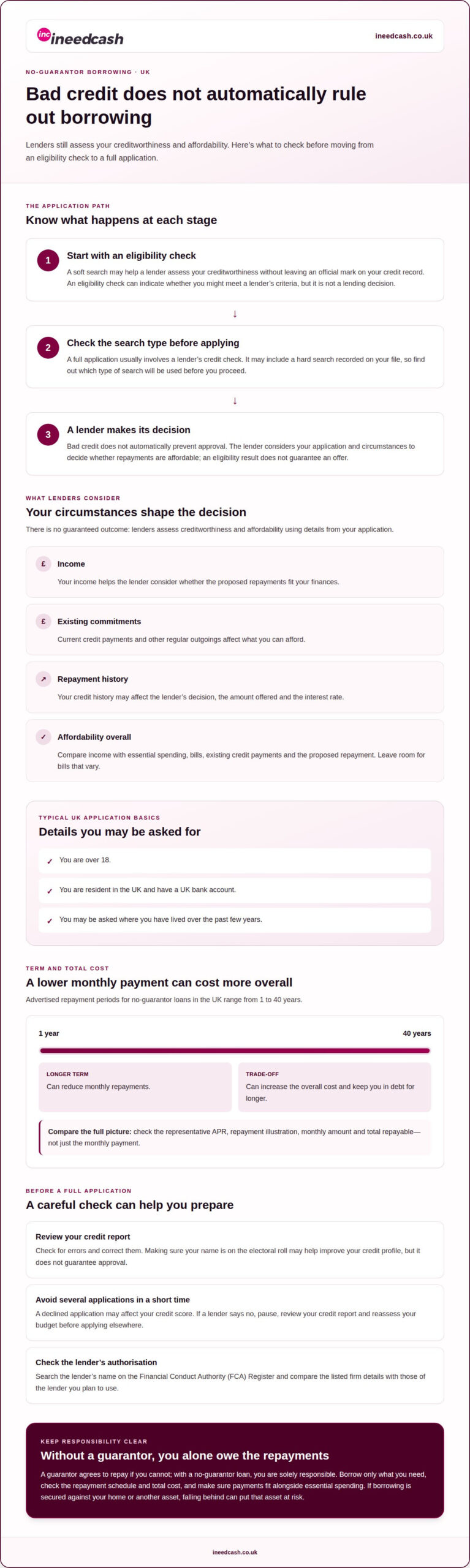
A soft search may help a lender assess your creditworthiness without leaving an official mark on your credit record. A full application usually involves a lender’s credit check, so find out which type of search is used before you apply.
Eligibility with bad credit
Bad credit doesn’t automatically prevent approval for an unsecured loan without a guarantor. Lenders assess your creditworthiness and affordability, including your income, existing commitments and repayment history. UK applications typically require you to be over 18, resident in the UK and have a UK bank account. You may also be asked where you’ve lived over the past few years.
Before applying, review your credit reports for errors and make sure your name is on the electoral roll. These steps may help improve your credit profile, but the lender will still decide based on your circumstances and application details. To check a lender’s authorisation, search its name on the Financial Conduct Authority (FCA) Register and compare the listed firm details with those of the lender you plan to use.
Credit checks and application outcomes
Start with an eligibility check that uses a soft search. An eligibility check may offer an indication of whether you could meet a lender’s criteria, but its effect on your credit record depends on how the check is carried out. If you proceed with a full application, lenders usually carry out a credit check, which may involve a hard search recorded on your file.
Complete the application carefully, including details of your income and regular outgoings. A declined application may affect your credit score, so avoid making several applications in a short time. If a lender says no, pause before applying elsewhere. Review your credit report, correct any errors and reassess your budget first.
For smaller borrowing needs, compare loans with credit cards and overdrafts. A credit card’s interest-free period applies only if you meet its terms; carrying a balance beyond that period can lead to interest. Minimum repayments keep the account up to date, but paying only the minimum can leave debt outstanding for longer. Check the card’s terms and repayment information before using it.
Can I get a no-guarantor loan with bad credit?
Yes, bad credit doesn’t automatically prevent approval. A lender assesses your application and circumstances to decide whether repayments are affordable. Your income, current commitments and credit history may affect the amount offered and the interest rate.
Eligibility and loan amounts
These figures describe possible limits, not an amount every applicant can borrow.
Repayment periods advertised for no-guarantor loans in the UK range from 1 to 40 years. A longer term can reduce monthly repayments while increasing the overall cost, so compare the term against your budget and how long you want to remain in debt.
Compare the full repayment cost
Check the representative APR and repayment illustration, not just the monthly amount. An illustration shows how the loan amount, term and interest contribute to repayments. The actual offer depends on the lender’s assessment of your circumstances, so read the terms and total repayable before accepting.
Work out how much you need, then compare it with your monthly budget. Include housing costs, bills and existing credit commitments. A lower monthly payment may seem easier to manage, but a longer term can increase the total cost.
Consider the risks before accepting
Missed repayments can cause serious financial problems and may harm your credit record. If your loan is secured against your home or another asset, falling behind can put that asset at risk. Don’t accept an agreement until you understand the repayment schedule and know you can manage it alongside essential spending.
If you’re ready to explore a loan application, start an online loan application and review its terms before making a decision.
Comparing guarantor and no-guarantor borrowing
UK lenders assess affordability and creditworthiness whether or not an application includes a guarantor. When considering a loan without one, lenders compare your income, credit history and repayment commitments to decide what you can afford.
Affordability and budgeting
Compare your monthly income with essential spending, existing credit payments and the proposed repayment. Leave room for bills that vary, such as energy costs, rather than relying on your highest-paid month. A lender considers affordability, but your own budget shows whether payments will leave enough for everyday costs. Borrow only what you need, and compare the total repayable as well as the monthly payment.
Reasons to borrow without a guarantor
Borrowing without a guarantor means you don’t need another person to agree to repay the debt if you can’t. It may suit someone who wants to keep their finances private or has no suitable person to ask. However, you alone are responsible for repayment. Poor credit may affect the lender’s decision, so weigh the reason for borrowing against what your income can support.
Comparing lenders and borrowing options
A guarantor loan involves another person agreeing to repay if you cannot; with a no-guarantor loan, you alone owe the payments. UK lenders assess affordability and creditworthiness in either case. The amount available without a guarantor can vary between lenders and depends on your circumstances. Compare the interest, term, monthly payments and total repayable, then accept only an offer that fits your budget.
For a smaller need, compare a loan with a credit card or overdraft. Check each option’s repayment conditions and how long you may carry the balance. Your credit history and income affect lending decisions, but a useful comparison considers the full cost and whether you can repay on time.
Payday and short-term loans
Payday and short-term borrowing is intended for a small, temporary cash need. Payday borrowing is generally a last resort for a small amount over a short period, not a way to cover an ongoing gap in your budget.
Check whether the repayment fits
Before applying, identify the exact expense and when you’ll have money available to repay the loan. Set out essential bills and income due before the repayment date. If making the payment would leave you short for rent, food or utilities, borrowing may not suit your current finances.
If you’re already repaying loans, consider whether another agreement would add pressure. Avoid relying on a new loan to repay an existing one. If the expense can wait, delaying it may help you avoid another commitment.
Read the agreement carefully
Before accepting, check the amount repayable, payment dates, interest and any charges for late payment. The FCA rules for the price cap on high-cost short-term credit are in CONC 5A. A price cap doesn’t tell you whether a particular agreement suits your budget, so assess the actual repayment schedule.
Payday borrowing is designed for the short term. Make sure the planned payment date matches your income schedule, and don’t assume you can extend the loan without extra cost or consequences. The agreement explains what happens if you miss a payment.
Check the firm and your next steps
Before submitting an application, look up the lender or broker on the Financial Conduct Authority Register. Match the firm’s name and details to the entry. This helps you check who is handling your application.
If you’re struggling to make a payment, contact the lender promptly and explain your situation. Keep a record of the conversation and any agreed next steps. Consider the full commitment before borrowing, especially if your income or essential spending may change before repayment is due.
I Need Cash: Homeowner Loans
I Need Cash is a credit broker that matches applicants with independent lenders, including for Homeowner Loans. If you own a home and are considering borrowing, compare this secured option with unsecured loans and consider how repayments would fit your budget.
A Homeowner Loan uses your home as security. This may affect the borrowing options available, but your home could be at risk if you fall behind on repayments. For significant decisions involving residential property, seeking advice from property law specialists such as Feltons Solicitors LLP can help ensure your legal obligations are clear. Carefully review the loan terms, total amount repayable and monthly commitment before accepting an agreement.
I Need Cash also helps people explore Bad Credit Loans, Personal Loans and Short Term Loans through its lender network. Consider which type of borrowing fits your need, then compare its repayment terms with your income and existing commitments.
Visit I Need Cash to explore your borrowing options.
Choose a next step that fits your plans
Before borrowing, write down what the money needs to cover and whether the need is one-off or ongoing. A loan can address an immediate expense, but it won’t solve a recurring budget shortfall. When considering no-guarantor loans in the UK, focus on the purpose, affordability and commitment you’re prepared to take on.
I Need Cash helps people explore Homeowner Loans, Short Term Loans and Bad Credit Loans through its network of independent lenders. Consider which type best matches your circumstances, and understand the repayment commitment before proceeding. If borrowing would leave too little for essential costs, pause and reconsider the amount or timing.
When you’re ready to explore your options, contact I Need Cash to discuss your options. Make the decision at your own pace, with a clear view of what you need and what you can manage.
Frequently Asked Questions
What are no-guarantor loans?
They’re loans you can take out without asking another person to guarantee repayment. Before accepting an agreement, check whether the loan is secured or unsecured and who is legally responsible for each payment. If an asset secures the borrowing, read the consequences of missed payments carefully. The agreement should also explain the repayment schedule and total amount repayable.
How much can I borrow without a guarantor?
The amount offered depends on the lender’s assessment, not simply the maximum advertised. First, work out how much you need for your planned expense, then check the offer’s repayment dates and total repayable. A smaller amount may better match your needs and budget. Don’t accept a larger offer just because it’s available; consider what you’ll have left after regular commitments.
Can I apply for a loan if I’m already in debt?
You can apply, but existing commitments form part of the lender’s assessment. An analysis of applicants already repaying other loans found a median monthly commitment of £150 from January to June 2026. Use your own statements to total current payments, then consider whether another repayment is manageable without relying on further borrowing or missing essential bills.
How do I know if I’ll be approved for a loan?
You can’t know for certain before a lender completes its assessment. An eligibility result can help you decide whether to proceed, but it isn’t a lending decision. Keep your application consistent with your records, especially your income and address details. Before applying, you can also check a firm’s regulatory status on the Financial Conduct Authority Register.
How do you decide if I’m approved or not?
The lender reviews the information in your application and assesses your creditworthiness before making its decision. The FCA’s CONC 5 rules cover this assessment. As a practical step, prepare accurate details of your income, regular spending and current credit commitments. If the lender declines your application, avoid immediately submitting several more, and review your information before deciding what to do next.
What are the alternatives?
For a purchase, compare borrowing with using savings or delaying the expense until you can pay without credit. A credit card may provide additional protection for eligible purchases: Section 75 of the Consumer Credit Act typically covers credit card purchases costing over £100 and not more than £30,000. Check whether the purchase and payment method meet the relevant conditions.

Article by
Mandy Paige
Social Content Writer and Blogger
Mandy has been writing for various website for a number of years, especially for companies in the consumer finance industry. She started her career guiding customers wanting help when applying for finance at a Loan Brokerage. Speaking to individuals wanting guidance, it lead her to start writing help and guidance on finding the right solution for their needs. Outside of writing, she is a wiz with a pair of scissors as she originally trained as a hairdresser.
Disclaimer
The content of this article/blog was correct to our knowledge on the date/time it was published.