 Skip to content

Loan to Pay Rent Deposit: Understand Costs and Timing
- Michelle
- Finance
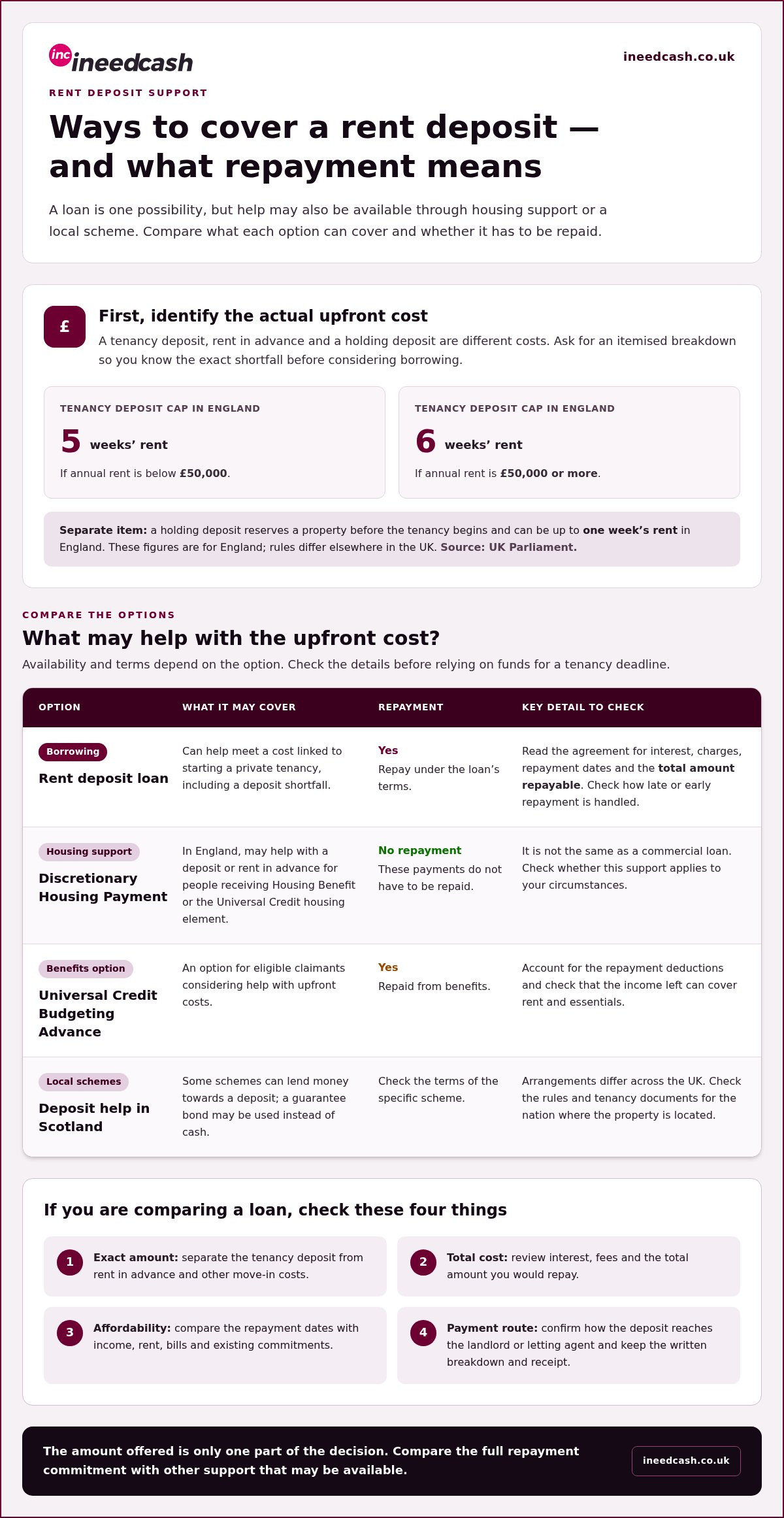
A loan to pay a rent deposit can cover the upfront tenancy deposit, with the borrowed amount repaid under the loan’s terms. In England, a landlord can ask for up to five weeks’ rent if the annual rent is below £50,000, or up to six weeks’ rent if it is £50,000 or more, according to UK Parliament.
It’s understandable to focus on how quickly you need the money when a new home is within reach. But the repayment amount, interest and any fees matter too. Look beyond the amount you borrow before deciding whether a loan suits your budget.
This guide explains how rent deposit loans work, what written terms and documents may be involved, and what to expect during an application. It also covers other types of help, so you can compare your options and make an informed decision.
Key Takeaways
- Understand what a rent deposit loan may cover and compare it with other possible help before borrowing.
- Know which details to look for in a written agreement, including repayment terms and how the money is paid.
- Prepare for the application process by understanding what can affect the decision and waiting time.
- Get ready to apply by gathering relevant identity, income and tenancy information.
1. What is a Rent Deposit Loan?
A rent deposit loan is borrowing to help meet a cost linked to starting a private tenancy. It can help bridge a shortfall, but it is separate from the tenancy deposit itself: the deposit is money held against obligations such as unpaid rent or damage. The Tenant Fees Act 2019 sets England’s deposit cap, while the rules differ elsewhere in the UK.
In England, a landlord can request up to five weeks’ rent when annual rent is below £50,000, or six weeks’ rent when it is £50,000 or more, according to UK Parliament. A holding deposit is separate and reserves a property before the tenancy begins. It can be up to one week’s rent, also according to UK Parliament.
Deposit protection matters after payment. In England, landlords must protect qualifying tenancy deposits taken on or after 6 April 2007 in a government-approved scheme. GOV.UK says, “Your landlord must protect your deposit” when the relevant tenancy rules apply. Keep proof of payment and the protection information with your tenancy paperwork.
Other UK nations have their own arrangements, so don’t assume England’s cap applies everywhere. In Scotland, some schemes can lend money towards a deposit, while a guarantee bond may be used instead of cash. Wales has different private-renting deposit rules from England. Check the tenancy documents for the nation where the property is located.
Before borrowing, separate the deposit from rent in advance and any reservation payment. A landlord’s request may include several upfront costs, so ask for an itemised breakdown in writing. This helps you identify the exact shortfall and avoid borrowing for costs that aren’t part of the deposit.
2. Written loan agreement and payment to landlord or agent
Before accepting a rent deposit loan, read the written agreement from start to finish. It should state how much you borrow, the interest and any charges, the repayment schedule, and the total amount repayable. Check the due dates against your usual income and rent payments. If a term is unclear, get an explanation before signing.
Check what happens if a payment is late or you want to repay early. Note any consequences, how to make repayments, and who to contact about payment problems. Keep a copy of the signed agreement and repayment schedule. These details help you compare the commitment with your rent, bills and other regular outgoings.
Also confirm how the deposit money will reach the landlord or letting agent. Under a rent deposit scheme, the required move-in money is paid directly to the landlord or letting agent, not to you or a family member. The scheme cannot pay the applicant or a family member directly. This makes it important to provide accurate payment details and agree the amount due with the landlord or agent.
Ask for a written breakdown of the amount due, including whether it covers the tenancy deposit, rent in advance, or both. Keep the tenancy offer, payment request and receipt with your loan papers. If the landlord or letting agent changes the move-in amount, compare the updated request with the agreement before payment is made.
Universal Credit claimants considering an advance should distinguish it from a commercial loan. Record the repayment deductions and make sure the remaining income can cover rent and essentials. If you’re weighing borrowing options, including Bad Credit Loans, compare the written terms rather than relying on an advertised repayment alone. You can start exploring loan options with those details in mind.
3. Applying for a loan and the waiting period
First, confirm the amount required and the date your landlord expects payment. Separate the tenancy deposit from rent in advance, moving costs and other upfront expenses. This gives you a clear borrowing figure and helps prevent taking out more than you need for the move.
Prepare details of your income, regular outgoings and existing credit commitments. A lender uses these to assess affordability and whether repayments fit your budget. Include benefit income, such as Universal Credit, accurately. If an advance or housing payment is already reducing your available income, account for that before applying.
Complete the application carefully, then review the proposed interest, repayment schedule and total amount repayable. Compare the instalments with your rent due date and other essential payments. Don’t base your decision on the amount offered alone. The borrowing cost and your ability to maintain repayments matter just as much.
There’s no single waiting period for every rent deposit loan. The application must be submitted, assessed, agreed and processed before funds can be used. Missing information or follow-up questions can add steps, so provide complete, consistent details at the outset. Keep your tenancy deadline in view, but don’t assume approval or payment will happen by a particular day.
Before borrowing, consider whether a local scheme or council housing payment could help. In England, a discretionary housing payment may help with a deposit or rent in advance for people receiving Housing Benefit or the Universal Credit housing element. These payments don’t have to be repaid, unlike a commercial loan. A Universal Credit Budgeting Advance is another option for eligible claimants, but it must be repaid from benefits.
Use a simple checklist: confirm the exact amount, gather income and spending details, compare repayments, then read the written terms before accepting. This helps you assess interest and timing together, rather than rushing into borrowing as a tenancy start date approaches.
4. Required documents
Gather your paperwork before starting an application. A lender may ask for proof of identity, such as a passport or driving licence, and evidence of your current address. A recent bank statement or household bill can help show where you live. Keep documents clear, current and consistent with your application details.
Income evidence helps show what repayments may fit your budget. Prepare recent payslips if you’re employed, or benefit statements if you receive Universal Credit or other benefits. Bank statements can show income and regular spending. Include existing credit repayments too, so the affordability picture reflects your actual commitments.
For the tenancy, gather the landlord’s or letting agent’s written offer, the proposed tenancy agreement and a breakdown of move-in payments. These documents should establish the deposit, rent in advance, payment deadline and property details. If the money must go directly to the landlord or agent, keep their payment instructions and contact details together.
Before submitting, compare every figure across the documents. The deposit request, for example, should match the amount in the tenancy paperwork. If the landlord changes the move-in date or rent request, keep the updated message. Accurate paperwork can prevent avoidable follow-up questions and make it easier to explain how much you need to borrow.
A council housing payment, local deposit scheme or Universal Credit Budgeting Advance has its own application process. For a council application, organise evidence of your housing costs and benefit entitlement. For a Budgeting Advance, have your Universal Credit details and planned use of the money ready. Grants and schemes may have different eligibility rules, so keep any decision letters with your tenancy documents.
Use a simple final check: identity, address, income, credit commitments, tenancy details and payment instructions. Save copies of what you submit and any written response. If you’re ready to explore borrowing, you can start an application with your details prepared.
I Need Cash: Homeowner Loans
I Need Cash can help you explore borrowing options by matching applicants with independent lenders. If you’re considering a homeowner loan to cover moving costs, compare its written terms and repayments with your rent, bills and other commitments before proceeding.
A homeowner loan is not the same as a council housing payment or rent deposit scheme. It involves borrowing, so focus on the total repayable amount, interest and repayment schedule. I Need Cash also offers Short Term Loans, Bad Credit Loans and Personal Loans, which may suit different borrowing needs.
First, set out the amount you need and what you can afford to repay. Then review the available terms carefully and decide whether borrowing fits your budget. Visit ineedcash.co.uk to explore your options.
Choose your next step with confidence
Before committing to a loan to pay a rent deposit, decide what repayment would remain manageable alongside your usual monthly essentials. Set that personal limit first, then use it to judge whether borrowing fits your circumstances. If the repayment would leave too little for everyday needs, pause and consider whether another option or a different move-in arrangement is more workable.
Write down any questions you still need answered, such as points about the repayment schedule or application process that feel uncertain. Having those questions ready can make a conversation more focused and help you weigh your options without feeling rushed.
If borrowing still seems like the right next step, contact I Need Cash to discuss your options. Take it one decision at a time, and choose the path that feels sustainable for your budget.
Frequently Asked Questions
What is a Rent Deposit Loan?
A rent deposit loan is personal borrowing intended to help fund an upfront renting cost. It’s different from a landlord’s deposit: the loan is credit you borrow, not money held under your tenancy. When comparing a loan to pay a rent deposit with other options, identify whether you need help with the deposit, rent in advance, or both.
Can you get a loan to pay a rent deposit in the UK?
Yes, you can apply for a loan to pay a rent deposit in the UK. Before deciding, separate the landlord’s request into its parts, such as the tenancy deposit and any rent due upfront. This helps you work out how much you need and avoid confusing a reservation payment with the tenancy deposit itself.
Are there council or charity schemes to help with rent deposits in the UK?
Yes. Crisis’s Help to Rent database lists private renting schemes across the UK, most of which support single people who are homeless or facing homelessness. Support varies by scheme and may include grants, loans or guarantees. Find out what form of help a scheme provides and whether it creates repayment obligations before relying on it to secure a tenancy.
How can I apply for a rent deposit loan or council scheme?
Start with the relevant council housing team if you need help because of homelessness or a risk of losing your home. In England, someone who could be homeless within the next eight weeks is advised to ask their council for homelessness assistance. For a loan application, state the purpose clearly and distinguish deposit funding from other move-in costs.

Article by
Mandy Paige
Social Content Writer and Blogger
Mandy has been writing for various website for a number of years, especially for companies in the consumer finance industry. She started her career guiding customers wanting help when applying for finance at a Loan Brokerage. Speaking to individuals wanting guidance, it lead her to start writing help and guidance on finding the right solution for their needs. Outside of writing, she is a wiz with a pair of scissors as she originally trained as a hairdresser.
Disclaimer
The content of this article/blog was correct to our knowledge on the date/time it was published.