 Skip to content

Emergency Loans for Bad Credit in the UK: Costs and Affordability
- Michelle
- Finance
A poor credit history doesn’t automatically rule you out of emergency loans for bad credit in the UK. Lenders assess your credit record alongside your income and regular outgoings to decide whether repayments are affordable. A weaker credit history can affect both the decision and the interest rate you’re offered.
When an unexpected bill needs attention, a quick answer can feel urgent. But approval is only one part of the decision: check that repayments are affordable and consider the total cost before borrowing.
This guide explains what emergency loans are, how lenders assess credit history, income and expenditure, and what to consider before borrowing. You’ll learn how applications are reviewed and how to judge whether repayments fit your budget.
Key Takeaways
- Understand how emergency loans work and compare the total repayment, not just the amount you can borrow.
- A poor credit history doesn’t automatically prevent you from applying, but it can affect the interest rate offered.
- Work out what remains after essential bills and regular spending to judge whether repayments fit your budget.
- Learn what lenders consider in a credit check and how I Need Cash’s loan options may suit different borrowing needs.
What is an Emergency Loan?
An emergency loan is short-term borrowing for an urgent expense, usually repaid over weeks or months. Before applying, consider the amount you need, the repayment schedule and the total cost, not just the chance of approval.
Loan amounts and repayment terms
Repayment terms range from 3 to 9 months. A six-month schedule spreads repayments across more paydays than a shorter term, but interest can increase the total. Borrow only what you need, then compare the amount approved with the amount you requested. Check each repayment date against your income and essential expenses. A lower instalment can still mean paying interest for longer.
Costs and repayment affordability
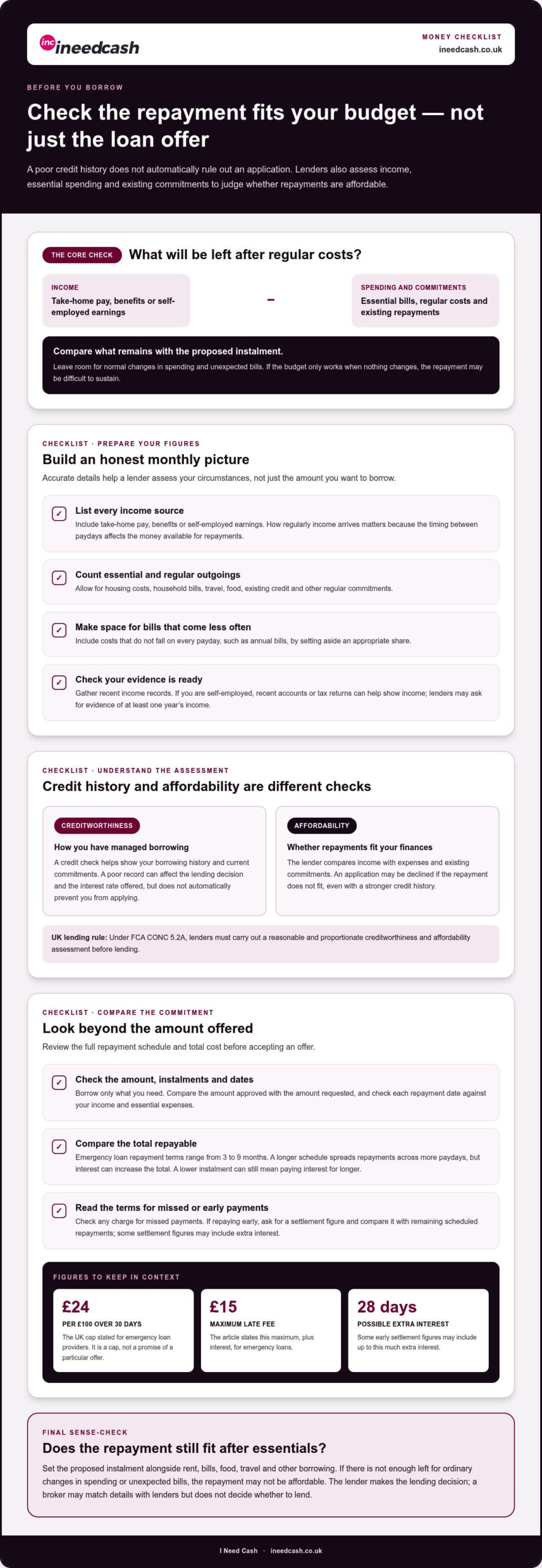
According to the Financial Conduct Authority, the UK cap for emergency loan providers is £24 per £100 over a 30-day term. This is a cap, not a promise of a particular offer. Before accepting, review the total repayable, interest, repayment dates and any charge for missed payments. The maximum late fee stated for emergency loans is £15, plus interest. Put the repayment into your budget alongside rent, bills and other borrowing.
Early repayment can change the interest you owe. Ask for a settlement figure and compare it with your remaining scheduled repayments. Some settlement figures may include up to 28 days’ extra interest. Read the terms before paying early, so you understand how the lender calculates the final amount.
Payday loans can be costly, while a guarantor loan may make the guarantor responsible for repayments if the borrower doesn’t pay. A broker introduces applicants to lenders or matches them with potential offers; the lender sets the terms and makes the lending decision. Understand each party’s role before proceeding.
To check affordability, list your take-home income and essential expenses, then subtract existing repayments. Compare the proposed instalment with what remains, allowing for unexpected bills. If the budget only works when nothing changes, the repayment may be difficult to sustain.
Are Emergency Loans Possible with Bad Credit?
Yes. A poor credit history doesn’t automatically rule out an emergency loan, though it can affect the interest rate and lending decision. Options in the UK include short-term loans and credit-union borrowing. Credit unions offer borrowing to members; online lenders use digital applications, while banks assess applications through their own lending processes.
Application and funds transfer process
Start by entering your requested amount, income, regular expenses and address details. The lender uses these details to assess your application and decide whether to make an offer. Read the repayment schedule and representative example before you accept. If approved, funds may arrive the same day, within a few days or within up to a week, depending on the lender.
Application decisions and timing
Timing depends on how quickly you submit accurate details, the lender’s checks and its payment process. An online form can be convenient, but completing it doesn’t mean lending is approved. Check the amount offered, interest and repayment dates before accepting. The Financial Conduct Authority regulates payday lending; understand whether you’re dealing with a lender or a broker. The emergency loans bad credit UK market includes different application routes, so compare the process as well as the offer.
Eligibility for different applicants
If you’re self-employed, recent accounts or tax returns can help show your income. Lenders may ask for evidence of at least one year’s income. If you’re unemployed, include any income you receive and your regular payments so affordability can be assessed. Universal Credit and incapacity benefits count as income for applications; Housing Benefit and Jobseeker’s Allowance do not.
Options for poor credit histories
Bad credit loans are one option, but a low credit score can mean higher interest. Compare the total repayment and check whether each instalment fits your budget before proceeding. Credit unions, banks and online lenders have different application routes, so compare eligibility, decision timing and repayment terms rather than assuming one type will suit everyone. For emergency loans bad credit UK applicants should weigh the costs and terms alongside the speed of a decision. To explore a possible route, start an application.
Affordability checks based on income and expenditure
Eligibility depends on more than your credit history. Lenders assess whether your income can cover the proposed repayments after essential spending and existing commitments.
Under FCA CONC 5.2A, lenders must carry out a reasonable and proportionate creditworthiness and affordability assessment before lending in the UK. Creditworthiness considers how you have managed borrowing; affordability focuses on whether repayments fit your finances. A poor credit record matters, but it is only one part of the assessment.
Lenders may consider pay, benefits or self-employed earnings. How regularly you receive income matters because changes between paydays affect the money available for repayments. They may also consider housing costs, household bills, travel, food, existing credit and other regular commitments. Accurate details help the lender assess your circumstances, not just the amount you want to borrow.
Prepare before applying by gathering recent income records and listing your regular outgoings. Include costs that don’t fall on every payday, such as annual bills, by setting aside an appropriate share. Then compare the remaining income with the proposed repayment. If there’s no room for normal changes in spending, the loan may not be affordable.
Eligibility checks and credit checks answer different questions. A credit check helps show your borrowing history and current commitments; an affordability assessment compares those commitments with your income and expenses. A lender may decline an application if the repayment doesn’t fit, even with a stronger credit history. A poor score, in turn, doesn’t automatically prevent you from applying.
When you apply through a broker, it may match your details with lenders, but the lender makes the lending decision. Check that the information you provide is accurate, then review the repayment schedule of any offer before accepting. This helps you see how the proposed payments fit your budget.
Credit checks for emergency loans
Lenders carry out a credit check as part of a UK loan application to review your borrowing history and existing credit commitments. Check your own credit file before applying so you can spot details that may need correcting and understand what a lender could see.
Bad-credit loan applications may ask for your addresses over the past three years. Prepare your address history and make sure it matches the details on your credit file. If an account or address looks unfamiliar, raise the error with the relevant credit reference agency before submitting an application.
An initial soft eligibility check won’t affect your credit score. It can indicate whether you may meet a lender’s criteria, but it isn’t an approval. Read the application wording to find out whether the next stage involves a full credit search, and consider this before proceeding.
To check whether a lender is authorised, search its legal name or firm reference number in the Financial Conduct Authority’s Financial Services Register. Compare the result with the firm’s application details, including its name and contact information, before sharing personal information.
The FCA describes its operational objectives as “protect consumers, protect financial markets and promote competition”, as set out on its official explanation of its role. Use the register to verify the firm, then read the privacy and consent wording to understand how your application details will be handled.
Keep a record of applications and decisions. If you’re declined, review the lender’s explanation and check your credit file before applying elsewhere. Compare the terms and repayment schedule before accepting an offer. To explore possible borrowing options, start an application.
I Need Cash: Homeowner Loans
I Need Cash can help you explore Homeowner Loans when comparing borrowing options after an urgent expense. As a credit broker, it matches applicants with independent lenders. The lender assesses your application and decides whether to make an offer.
Consider a homeowner loan only after comparing the repayments with your income, regular expenses and other commitments. If the loan is secured against your home, missed repayments could put your property at risk. Compare it with a Short Term Loan, Bad Credit Loan or Personal Loan, focusing on affordability and the total repayment rather than speed alone.
Review the terms presented to you before accepting any offer. If you’d like to explore your options, visit I Need Cash’s Homeowner Loans page.
Choose a next step that fits your budget
Before borrowing, consider whether a loan will cover the immediate problem without creating another one when the next payment is due. Write down what you need to pay for, what you can afford to repay and which regular expenses must remain covered. This gives you a practical starting point for considering emergency loans for people with bad credit in the UK.
I Need Cash offers Homeowner Loans, Short Term Loans and Bad Credit Loans through a brokerage service that matches applicants with independent lenders. Read the terms and consider the repayment commitment before accepting an offer. Borrowing secured against your home puts your property at risk if you don’t keep up with repayments.
There’s no need to rush a decision because an expense feels urgent. If you’re ready to explore possible options, start by discussing your borrowing needs. A clear view of your budget can help you move forward with care and confidence.
Frequently Asked Questions
What do I need to qualify for a payday loan?
Applicants generally need to be at least 18, live in the UK and show they can afford repayments. Lenders assess income, regular spending and existing borrowing, as well as credit history. Gather accurate details about your finances before applying. If you’re self-employed, recent accounts or tax returns can help demonstrate income. Meeting basic criteria doesn’t mean a lender will approve an application.
What should I do if I’m struggling with debt?
If you’re already struggling with debt repayments, speak to a free, independent debt adviser before taking on another loan. Citizens Advice, National Debtline and StepChange offer confidential debt advice. Before seeking help, write down your debts, payment dates and essential bills. An adviser can help you understand your options and prioritise urgent costs instead of relying on further borrowing to cover existing repayments.
Will applying affect my credit score?
An initial soft eligibility check doesn’t affect your credit score, but a full application can involve a credit check. Find out what type of search will be made before you submit an application. Lenders may use credit checks as part of their assessment. Compare the terms before applying, and keep track of which lenders you’ve approached.
Am I allowed to apply if my income is via benefits?
You can apply, but lenders assess whether your income and circumstances support the repayments. Universal Credit and incapacity benefits can count as income in loan applications. Housing Benefit and Jobseeker’s Allowance aren’t counted as income for the applications described here. Include other regular income and essential expenses accurately, then consider whether repayments remain manageable after your bills are paid.
Are emergency loans suitable for long-term borrowing?
Emergency loans are generally intended for short-term needs, with repayment over weeks or months, rather than ongoing costs. Repeated short-term borrowing for regular bills can leave less income for future repayments. For a longer-term need, compare repayment schedules and the total amount payable across suitable options. Work out how each payment fits alongside essential spending before borrowing.
Can I get a crisis loan today?
Government Crisis Loans no longer exist in the UK; they were replaced by Budgeting Loans and local council support. If you need help with food or housing costs, contact your local council to ask about support available in your area. The help available depends on your circumstances, so explain the urgent expense and any support you’ve already sought.

Article by
Mandy Paige
Social Content Writer and Blogger
Mandy has been writing for various website for a number of years, especially for companies in the consumer finance industry. She started her career guiding customers wanting help when applying for finance at a Loan Brokerage. Speaking to individuals wanting guidance, it lead her to start writing help and guidance on finding the right solution for their needs. Outside of writing, she is a wiz with a pair of scissors as she originally trained as a hairdresser.
Disclaimer
The content of this article/blog was correct to our knowledge on the date/time it was published.