 Skip to content

Loan brokers in the UK for fees and bad credit options
- Michelle
- Finance
Bad credit doesn’t automatically rule out an unsecured loan. A loan broker in the UK can introduce you to lenders, but each lender assesses your credit history and financial circumstances before deciding whether to offer a loan.
It’s understandable to worry that a broker’s fees could add pressure when money is already tight. This guide explains how broker charges and lender commissions work, what written fee information and consent mean, and what lenders consider when reviewing an application with bad credit.
You’ll learn how to distinguish a broker from a lender, what to look for in a fee notice, and when a broker may receive commission. The aim is to help you understand the costs and process before deciding whether to proceed.
Key Takeaways
- A bad credit history doesn’t automatically rule out an unsecured loan; lenders assess your circumstances, credit history and ability to repay.
- Before proceeding, find out whether a broker charges you, receives lender commission, or does both.
- For applicable broker fees, look for written information about the charge and give written agreement before payment details are requested.
- Understand how a broker’s role differs from a lender’s, and what support may help you explore suitable loan options.
Do loan brokers charge fees?
Some brokers charge customers, receive commission from lenders, or do both. The fee depends on the broker’s agreement and the type of loan.
Fees across loan types
For an unsecured personal loan, a broker may charge a service fee, receive lender commission, or do both. A secured loan uses an asset, such as a home, as collateral; fees and terms may differ from unsecured borrowing. Explore homeowner loan options when considering borrowing secured against a home.
Bridging loans may be regulated or unregulated, depending on the circumstances and loan purpose. Bad credit options also vary, as lenders assess each application. Before agreeing, identify any broker fee and whether commission comes from a lender.
Who pays the broker fee
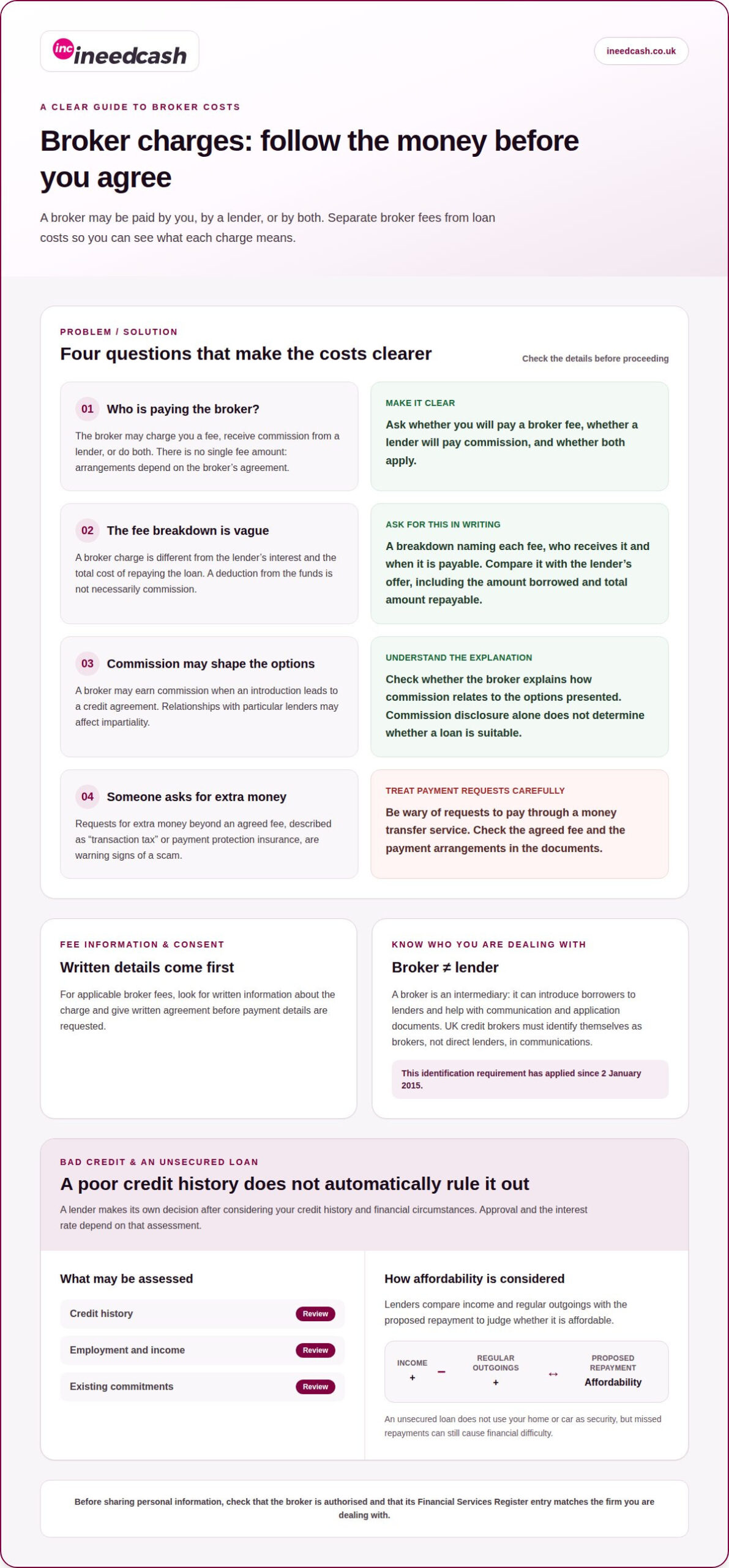
You may pay a broker fee, a lender may pay commission, or both may apply. There is no single fee to quote: the amount and payment arrangements depend on the broker’s agreement. Before proceeding, ask for a clear breakdown of any fee, commission and payment timing.
A broker introduces borrowers to lenders and can help with communication and application documents. The broker must make clear that it is an intermediary, not the lender. From 2 January 2015, UK credit brokers must identify themselves as brokers and not direct lenders in communications, according to UK legislation.
To apply, provide accurate information about your finances, including your employment and income. A broker may ask about your credit history and financial circumstances, and the documents required depend on the application.
There is no single turnaround time for a loan through a UK broker. The lender’s review, the completeness of your application and, for secured or bridging loans, valuation or legal work can affect timing.
If a broker charges a fee or takes payment details without following the applicable information-notice rules, you can complain and seek a refund. You can also complain if your personal details are shared with other companies without your agreement.
Broker fees and lender commissions
A broker may earn money from you, a lender, or both. Before agreeing, separate any broker charges from the loan’s interest and total repayment amount.
Broker fee transparency
Ask for a written breakdown naming each broker fee, who receives it and when it is payable. Compare this with the lender’s offer, including the amount borrowed and the total amount repayable. This helps distinguish the broker’s service fee from interest and other loan costs.
Be cautious if someone asks for extra money beyond an agreed fee, describing it as transaction tax or payment protection insurance. Such requests are a warning sign of a scam. Be wary of requests to pay through a money transfer service.
Lender commissions
A broker may receive commission from a lender when an introduction leads to a credit agreement. It may also charge you a separate fee, so ask whether both apply. A broker’s relationships with particular lenders may affect its impartiality. Check that the explanation makes clear how commission relates to the options presented.
Whether you’re considering a secured or unsecured loan, distinguish between what you pay the broker and what the lender charges. Your circumstances and the loan terms affect the offer; commission disclosure alone does not determine the loan’s suitability.
Before accepting an offer, request a clear breakdown of any fee and commission, then read the lender’s agreement carefully. Check whether a disbursement fee is listed, who charges it, and whether it is paid separately or deducted from the funds. Compare the amount you would actually receive with the total amount repayable. Don’t assume a deduction is broker commission unless the documents identify it as such.
If you’re ready to explore borrowing options, you can start a loan application and review the information provided before deciding whether to proceed.
Can I get an unsecured loan with a bad credit score?
Possibly. A poor credit history doesn’t automatically prevent you from borrowing, but lenders assess your application, credit history and financial circumstances before deciding.
Eligibility and credit score checks
Eligibility depends on more than your credit score. Lenders may consider your credit history, employment, income and existing commitments when assessing an application. They use this information to judge whether repayments are affordable and what interest rate to offer.
A broker may ask about your credit history and finances to identify potential options. Before agreeing to a search, ask whether it is an initial eligibility check or a full application check, and how it may appear on your credit file. Understanding the difference helps you know what happens before you submit an application.
Credit checks and affordability
UK lenders check credit histories before offering loans. They also assess affordability by comparing income and regular outgoings with the proposed repayment. Share accurate details, including your employment status and current borrowing, so the assessment reflects your finances.
An unsecured loan doesn’t use your home or car as security, but missed repayments can still cause financial difficulty. Consider whether the repayments would remain manageable alongside essential costs, not just whether a lender might approve your application.
Using a broker does not, by itself, tell you whether a credit search will affect your score. The type of search matters, so understand what will happen before giving consent. A lender’s decision and interest rate may depend on its assessment, even if an initial eligibility result looks positive.
Borrower protections include dealing with an authorised credit broker. The Financial Conduct Authority’s Handbook calls the assessment of a borrower’s creditworthiness an “assessment of the creditworthiness of a customer” (CONC 5.2A.4R). You can also check a broker’s status on the Financial Services Register, maintained by the Financial Conduct Authority.
Check that the broker’s entry on the Financial Services Register matches the firm you’re dealing with before sharing personal information. This helps you distinguish the broker’s role from the lender’s credit and affordability decision, and understand the repayment commitment before proceeding.
Credit broker fees and written consent
For applicable credit broking, written consent must come before a fee or request for payment details. From 2 January 2015, a broker must first give you written fee information, then receive your written agreement. This rule helps you see the charge before money or payment details are involved, as set out in the Credit Brokers Regulations.
Read the notice before agreeing. It must state the broker’s legal name and make clear that it is a broker, not a lender. It must also give the fee amount or likely amount, when payment is due and how you’ll pay. If any detail differs from the later agreement, pause and resolve the difference before accepting.
There’s an important exception: these written notice and agreement rules don’t apply to credit secured on land, such as a mortgage. A loan secured on a home may therefore fall outside these specific fee rules. Don’t assume an unsecured loan has the same exception; identify whether the proposed credit is secured on land.
If your payment details are passed to another broker, that broker must provide its own information notice and get your agreement before charging a fee. A low credit score or bad credit history doesn’t remove this protection. Keep the notice and agreement so you can check the broker’s name, fee and payment terms.
If a broker charges you or takes payment details without following the applicable notice rules, you can complain and seek a refund. You can also complain if your personal details are shared with another company without your agreement. The Financial Conduct Authority’s Financial Services Register lets you check a broker’s status.
Before proceeding, make sure you understand the fee notice and the agreement, including who will charge you. If you’re ready to explore an application, start your loan application.
I Need Cash: Bad Credit Loans
I Need Cash is a UK credit broker that connects people seeking bad credit loans with independent lenders. It can help you explore options suited to your circumstances, while the lender assesses your application and decides whether to offer credit.
Bad credit can make borrowing feel harder, but it doesn’t define your whole financial picture. Lenders consider your credit history alongside your income, employment and existing commitments. Before accepting an offer, review the repayment amount, interest rate and total cost, and make sure the repayments fit your budget.
If you’re considering borrowing, I Need Cash also offers personal, short-term and homeowner loans. Each option has different terms and suitability, so focus on the type of borrowing that matches your needs and circumstances.
Contact I Need Cash to discuss your borrowing options.
Make your next borrowing decision with confidence
Before taking on a financial commitment, define what you need the money for. Then consider how repayments would fit alongside essential costs and existing commitments. Understanding your budget can help you decide whether borrowing is the right next step, rather than acting under pressure.
If you’re exploring options, prepare details about your circumstances and what you can comfortably repay. A loan broker in the UK can help you explore a route to an application, while the lender makes its own decision. Take time to understand any offer before accepting it.
When you’re ready to discuss your options, contact I Need Cash. Take the next step at your own pace and make a choice that feels manageable for you.
Frequently Asked Questions
Is it better to use a broker or go direct?
It depends on whether you want help finding options or prefer to approach a lender yourself. A broker can introduce you to lenders, while applying directly means dealing with a lender’s own products and process. If you have a specific lender in mind, applying directly may suit you. If you want to explore options across a lender panel, a broker may be useful.
Should I use a broker or a lender?
A broker introduces you to lenders; a lender provides credit and decides whether to approve your application. Use a broker when you want to explore options from its lender panel. Approach a lender directly if you’ve identified a suitable product and want to apply there. Either way, read the proposed repayment terms carefully before accepting an offer.
How do I find an FCA-authorised loan broker in the UK?
Search the Financial Services Register, operated by the Financial Conduct Authority, using the broker’s legal name or firm details. Check that the entry matches the business you’re dealing with and review its status before sharing personal information. If a trading name differs from the registered legal name, use the firm details in its communications to find the correct entry.
What types of loans can UK loan brokers arrange?
Loan options depend on a broker’s lender panel and the borrower’s circumstances. I Need Cash connects applicants with independent lenders for homeowner, short-term, bad credit and personal loans. A homeowner loan is secured against a property, while a personal loan may be unsecured. The lender assesses each application and sets the terms of any offer.
How do UK loan brokers compare with banks and direct lenders?
A bank or direct lender considers applications for its own products. A broker acts as an intermediary and can introduce applicants to lenders on its panel, which may include regulated UK lenders. This offers another route to explore borrowing, but not every lender or product is available through every broker. Compare the actual offer and repayment commitment.
What are the risks of using a loan broker, including upfront fees and scams?
Risks include unclear charges, commission arrangements that may affect impartiality, and unusual payment requests from scammers. An upfront fee isn’t automatically proof of a scam, but understand what it covers and when it’s due before agreeing. MoneyHelper’s UK guidance on borrowing offers a consumer-focused perspective on weighing loan costs and repayments before committing.

Article by
Mandy Paige
Social Content Writer and Blogger
Mandy has been writing for various website for a number of years, especially for companies in the consumer finance industry. She started her career guiding customers wanting help when applying for finance at a Loan Brokerage. Speaking to individuals wanting guidance, it lead her to start writing help and guidance on finding the right solution for their needs. Outside of writing, she is a wiz with a pair of scissors as she originally trained as a hairdresser.
Disclaimer
The content of this article/blog was correct to our knowledge on the date/time it was published.