 Skip to content

Moving house loan options and how much you could borrow
Could a personal loan help with moving costs without increasing your mortgage? It may cover removals, storage, a deposit or essential home repairs, depending on the lender’s decision.
Moving can put pressure on your finances, especially when costs arrive alongside a home purchase. A moving house costs loan is one option, but understand the repayments before borrowing.
This guide covers borrowing options for homeowners, what may affect how much you can borrow, and how to check eligibility without affecting your credit score. You’ll also learn what to consider before deciding whether a loan suits your move.
Key Takeaways
- If you own your home outright, sale proceeds may help fund your next purchase, but you may still need to cover a price gap and moving expenses.
- Before borrowing, look beyond the monthly instalment and weigh the total amount repayable against your budget.
- A broker’s eligibility check may use a soft credit search, which doesn’t leave the same footprint as a full application.
- A personal loan could help with removals, storage or essential repairs; the right option depends on your needs and ability to repay.
Moving when you own your home outright
Selling a mortgage-free home can release equity for your next purchase. For example, a UK homeowner selling for £350,000 can use the net sale proceeds as a deposit on another property. The amount available depends on the sale proceeds after costs and how much you put towards the next home. Equity isn’t cash in your account before the sale completes. The home-buying process can also help you understand the stages involved.
Buying before your sale completes can create a timing gap. You may need funds for the new purchase before the old property’s proceeds are released. If you buy for £500,000 after selling a mortgage-free home, you may need a new mortgage, savings or other funds for the price difference and buying costs. These costs may include property transaction tax, depending on where you’re buying. In England, Stamp Duty Land Tax may apply. Aligning completion dates can help coordinate sale proceeds with the purchase payment.
A mortgage may still be necessary if your equity and savings aren’t enough. When moving, you could apply for a new mortgage or ask about porting your existing one. Many UK mortgages are portable, subject to the lender’s assessment, but not all are. Porting may take less time and effort than arranging a new deal, though you’ll usually need to reapply. The lender will value the new property to assess whether you need additional borrowing.
Porting may avoid early repayment or exit fees on your current mortgage. However, increasing the borrowing can involve a fee and property valuation, while extra borrowing may have a different interest rate. A new mortgage may take longer because you need to find and secure another deal. Compare the payments and total borrowing against what you can afford, including moving costs. If you’re considering using property equity, homeowner loan options are another route to explore, with repayments adding to your regular outgoings.
Can I get a loan for moving house?
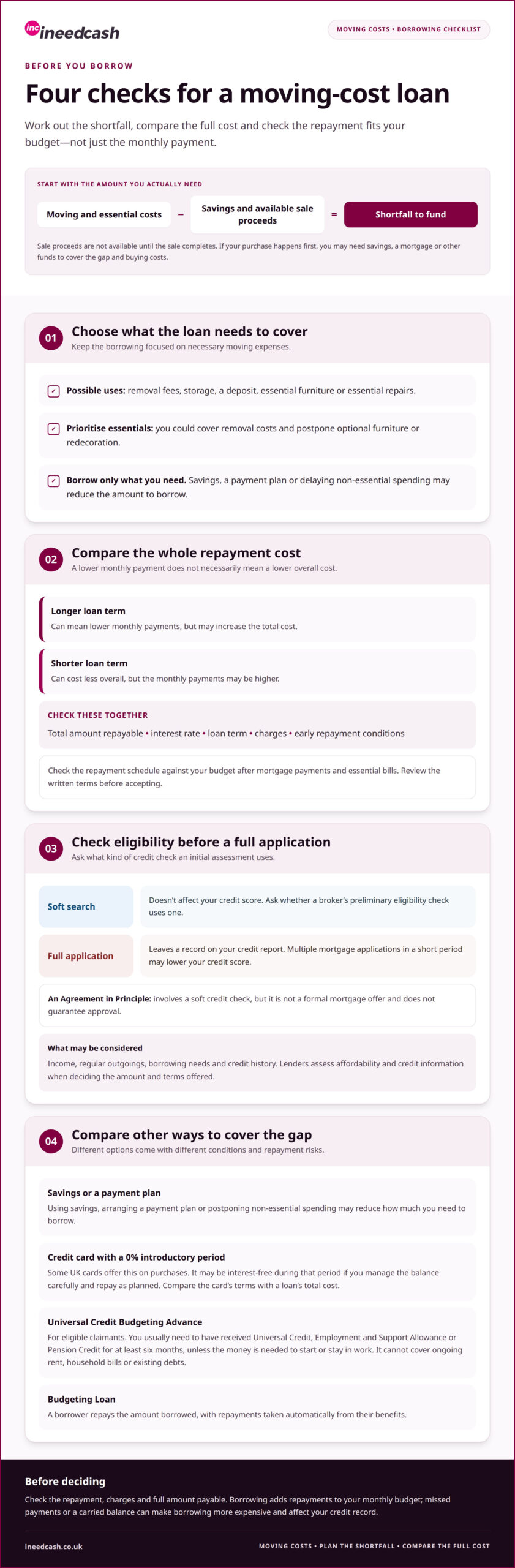
Yes, a loan can cover moving costs, but first calculate the shortfall after using savings and any proceeds from your home sale. The loan term affects the total interest, so consider the full amount repayable as well as each monthly payment.
Loan terms and total borrowing costs
A loan term is the period allowed for repaying the amount borrowed, plus interest and applicable charges. A longer term can lower monthly payments but may raise the total cost. A shorter term can cost less overall but require higher payments. Check that the repayment schedule fits your budget after mortgage payments and essential bills.
Comparing borrowing costs
Compare the total amount repayable, not just the monthly payment. Check the interest rate, term, charges and early repayment conditions. For high-cost short-term credit, interest and fees cannot exceed the amount borrowed. The lender’s assessment, including affordability and credit history, affects the amount and terms offered, so review the written terms before accepting.
Alternatives to borrowing
Savings, a payment plan or delaying non-essential spending may reduce the amount you need to borrow. For example, you could prioritise removal costs and postpone redecoration. Property transaction taxes also vary across the UK: England’s Stamp Duty Land Tax guidance explains the tax for purchases there, while Wales and Scotland have separate systems. Include the applicable tax when estimating upfront cash needs.
Even with a poor credit history, lenders will assess affordability and credit information. A bad credit loan may be worth exploring, but check the total repayment cost carefully. Borrow only what you need for essential moving expenses, and avoid using credit for costs you could postpone.
A Budgeting Loan borrower only has to repay the amount borrowed, with repayments taken automatically from their benefits.
How a loan broker can check your eligibility without affecting your credit score
A preliminary eligibility check can indicate whether a loan may suit your circumstances before you make a full application. A broker can use details such as your income, regular outgoings, borrowing needs and credit history to explore potential options.
Ask whether the initial check uses a soft search. A soft search doesn’t affect your credit score, while a full credit application leaves a record on your credit report. An Agreement in Principle also involves a soft credit check, but it isn’t a formal mortgage offer and doesn’t guarantee approval.
Mortgage providers review your credit history even if you already have a mortgage. Multiple mortgage applications in a short period may lower your credit score, so avoid applying repeatedly while buying a home. An early eligibility assessment from a broker can help you understand potential suitability before proceeding to a full application.
Using a personal loan or credit card for moving costs adds repayments to your monthly budget and increases the total you owe. Missed payments or a carried balance can make borrowing more expensive and affect your credit record.
Some UK credit cards offer a 0% introductory period on purchases. This can make a card an interest-free option during that period if you manage the balance carefully and repay it as planned. A personal loan instead has agreed repayments over a set term, so compare its total cost with the card’s terms before choosing.
A Universal Credit Budgeting Advance is another option for eligible claimants. You usually need to have received Universal Credit, Employment and Support Allowance or Pension Credit for at least six months, unless the money is needed to start or stay in work. It can’t cover ongoing rent, household bills or existing debts.
Moving house itself doesn’t affect your credit score, but borrowing and mortgage applications can. Update your details on the electoral roll at your new address to help protect your credit record. Before applying, check the repayment, any charges and the full amount payable.
Using a personal loan for moving costs
An unsecured personal loan can help cover moving expenses such as removal fees, storage, a deposit, essential furniture or repairs. For example, a moving house costs loan could cover removal fees and urgent repairs while you postpone optional furniture purchases. The amount and permitted use depend on the lender’s terms and your eligibility.
Separate essential costs from anything you could delay. Moving expenses can come due close together, but borrowing more means repaying more. Match the loan to specific costs, then consider whether the monthly payment fits alongside your mortgage, household bills and other commitments.
Check the interest rate and whether it’s fixed or variable. A fixed rate stays the same during its agreed period, while a variable rate can change and affect repayments. The loan term matters too: spreading repayments over a longer period can reduce each payment but increase the total interest. Before choosing a moving house costs loan, compare the full amount repayable, not just the monthly figure.
Eligibility depends on factors such as income, regular outgoings, credit history and the amount requested. A lender assesses whether repayments are affordable for you. If you’re buying a home as well as moving, include mortgage payments and other borrowing when calculating what you could repay each month.
Allow time for the application. A loan to move house can take several weeks to a few months, depending on the lender and case complexity. This could affect plans to pay a removal company, cover storage or complete essential repairs. Build the application period into your moving schedule rather than relying on funds arriving immediately.
A personal loan may suit you when the costs are clear and repayments fit your budget. If you’re ready to explore your options, start an eligibility check.
Depending on your circumstances, a Budgeting Loan may be another option: in the UK, a person may be eligible if they have been receiving certain benefits for 6 months. Check whether this applies to you before deciding how to fund essential moving costs.
I Need Cash
I Need Cash can help you explore borrowing options when savings don’t cover moving expenses. As a credit broker, it matches applicants with financial products from independent lenders. Options include personal and homeowner loans, as well as products for people whose credit history may make borrowing more challenging.
Consider borrowing if you’ve listed essential costs, worked out what you can afford to repay, and still need help covering the shortfall. Before accepting an offer, review the interest rate, repayment term and total amount repayable. Borrowing more than you need can increase the overall cost.
Share your circumstances to explore potential options suited to your needs. Contact I Need Cash to take the next step.
Choose your next step with confidence
Before pursuing a moving house costs loan, decide what it would cover and how the repayments fit your budget. This gives you a clearer basis for weighing your options and helps you avoid borrowing more than the move requires.
I Need Cash offers Homeowner Loans, Short Term Loans and Bad Credit Loans, matching applicants with options from independent lenders. The right route depends on your needs and circumstances, so take time to understand the terms before proceeding.
If you’re ready to explore possible options, get started with I Need Cash. Take the next step at your own pace and make a choice that feels manageable for your move.
Frequently Asked Questions
How much can I borrow for moving?
The amount you could borrow depends on your income, regular spending, existing credit commitments and the lender’s affordability assessment. Calculate the shortfall after accounting for savings and any home-sale proceeds, then focus on borrowing only what the move requires. For example, include essential costs such as removals and immediate repairs, but leave out optional furniture purchases if you can delay them.
How can a loan broker help improve your chances of getting credit to move house?
A broker can help identify lenders whose criteria may suit your circumstances and present your application to relevant options. This can help you avoid applying indiscriminately, but it can’t guarantee approval or determine a lender’s decision. Provide accurate details about your income, outgoings and credit commitments, and explain whether you need the funds for removals, storage or another moving expense.
What information should you provide to estimate the total upfront cash needed to move house in the UK?
List the purchase price, expected sale proceeds and timing, along with costs due before or at completion. Include the relevant property transaction tax for your UK nation, conveyancing, mortgage-related charges, removals, storage and essential work. Note any deposit already paid and savings available. This separates your total moving budget from the cash you need upfront.

Article by
Mandy Paige
Social Content Writer and Blogger
Mandy has been writing for various website for a number of years, especially for companies in the consumer finance industry. She started her career guiding customers wanting help when applying for finance at a Loan Brokerage. Speaking to individuals wanting guidance, it lead her to start writing help and guidance on finding the right solution for their needs. Outside of writing, she is a wiz with a pair of scissors as she originally trained as a hairdresser.
Disclaimer
The content of this article/blog was correct to our knowledge on the date/time it was published.