 Skip to content

Funeral cost loans in the UK: costs and repayments
Yes, you can use a personal loan to help pay for a funeral in the UK. Borrowing can spread the expense, but the repayments and interest need to fit your budget.
Facing funeral costs while you’re grieving can be difficult to manage. This guide explains what a funeral cost loan in the UK involves, how affordability and credit checks work, and what to consider before borrowing. It also covers how interest affects repayments, helping you weigh up whether a loan or another way to pay may suit you better.
Key Takeaways
- A personal loan can help spread funeral costs, but make sure the repayments fit your budget before borrowing.
- Use the simple attended funeral average as a guide, then consider which choices could affect the amount you need.
- Explore possible support and other ways to pay before deciding how much to borrow.
- Compare the full repayment cost, loan term and credit-check implications to understand what borrowing could mean for you.
Funeral-specific unsecured loans
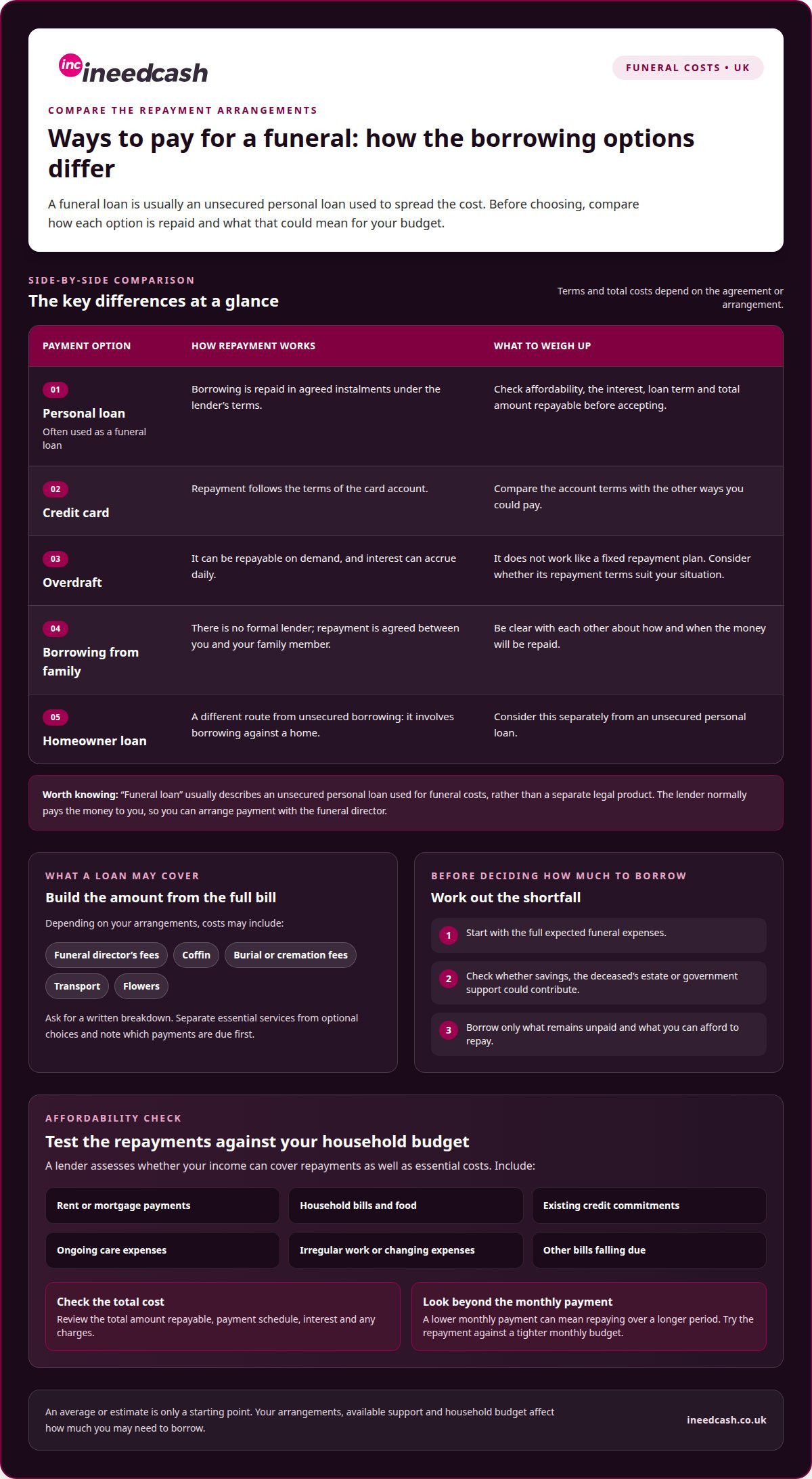
A funeral loan is usually an unsecured personal loan used to cover funeral costs, rather than a separate legal product. The lender normally pays the money to you, so you can arrange payment with the funeral director.
Comparing Funeral Loans with Other Borrowing
A funeral loan spreads borrowing into agreed repayments; a credit card uses its own account terms, while an overdraft can be repayable on demand and accrue interest daily. Borrowing from family avoids a formal lender, but you’ll need to agree how and when to repay them. These differences affect the flexibility and total cost of paying, so compare the repayment arrangements before choosing. A homeowner loan is a different route from unsecured borrowing; explore the homeowner loan option if you’re considering borrowing against a home.
Costs a Funeral Loan Can Cover
A loan can cover costs included in your funeral arrangements, such as the funeral director’s fees, coffin, burial or cremation fees, transport and flowers. The amount you borrow depends on the bills you need to pay and your ability to manage repayments. Include the full expected expenses when working out the amount, rather than focusing only on the coffin or service. Funeral Expenses Payment can help with moving the body if it is moved more than 50 miles, according to the Department for Work and Pensions.
Applying and Providing Documents
To apply, provide information about your identity, finances and the amount you want to borrow. Useful documents include proof of identity and address, evidence of income, bank details, and an estimate or invoice from the funeral director. The lender uses your application to assess whether repayments are affordable. Approval for a personal loan can take several days, so consider the timing if a deposit is due.
Before borrowing, check whether government support or money from the deceased’s estate could contribute towards the bill. In Scotland, a death must be registered within 8 days, according to National Records of Scotland. Your circumstances, the funeral arrangements and the available support all affect how much you need to borrow. A loan can help manage an immediate bill, but it adds repayments to your future budget.
Loan affordability and repayment terms
Affordability means borrowing an amount you can repay alongside regular household expenses. Work out how repayments fit your income before agreeing to credit.
Assessing Loan Affordability
A lender assesses whether your income can cover repayments as well as essential costs. Include rent or mortgage payments, bills, food, existing credit and ongoing care expenses in your budget. Also consider costs that could reduce your available income, such as irregular work or changing household expenses. The funeral bill is only one part of the decision.
Borrow only what you need for costs that remain unpaid after considering other funds. Money from the deceased’s estate, available savings or government support may reduce the amount required. For example, if the estate can cover some expenses after probate, borrowing the full funeral bill could leave you repaying more than necessary. A cremation or burial plan also affects the final sum.
Repayments and Borrowing Risks
Repayments turn an urgent funeral expense into a commitment that continues after the service. Funeral finance can spread costs through monthly repayments under a credit agreement, with terms set by the lender or provider. Check the total repayable amount, payment schedule and interest before accepting. A lower monthly payment can mean repaying over a longer period.
The main risk is committing to repayments your budget cannot sustain. If you miss payments, the balance remains due and debt can become harder to manage alongside household bills. Overdrafts work differently: they may be repayable on demand and accrue interest daily. Don’t rely on an overdraft as though it were a fixed repayment plan.
Before deciding, list your income and regular expenses, then test the repayment against a tighter monthly budget. If you want to explore a personal loan application, start your application with the amount and repayment you’re considering. Take time to understand the agreement before proceeding, especially if another expense could affect your ability to pay.
Average cost of a simple attended funeral
These figures describe different arrangements, so use the one closest to the service you’re considering. A funeral director’s estimate can help you understand how your choices affect the amount to pay.
How arrangements affect the cost
Averages offer a starting point, not a quote for your family’s plans. The service, transport and personal choices all influence the final expenses. For example, flowers or a particular ceremony may add costs, while a simpler arrangement can reduce the amount you need to find. MoneyHelper’s UK guidance on paying for a funeral can help you consider ways to manage the bill.
Ask for a written breakdown of the planned arrangements. Separate essential services from optional choices, then note which payments are due first. This gives you a clearer view of the immediate amount to cover and the total expected cost. If you’re comparing an attended service with direct cremation, compare what each arrangement includes, not just the headline figure.
Planning what you can afford
Some funeral providers allow customers to pay in instalments, though the payment plan depends on their arrangement. If you’re considering this route, include the schedule in your budget and compare it with other bills falling due. You can also review official UK support information: GOV.UK’s Funeral Expenses Payment guidance explains support in England and Wales, while mygov.scot’s Funeral Support Payment guidance covers Scotland.
Use the estimate to work out the shortfall after taking available funds into account. That figure can help you decide whether borrowing is necessary and, if so, how much you need. Keep the estimate and payment dates together so your decisions reflect the actual arrangements, rather than an average alone.
Loan terms, interest and credit checks
Funeral borrowing can take the form of an unsecured personal loan, with interest and repayments set out in the agreement. Check the term, total amount repayable and any charges before accepting an offer.
Available Funeral Loans and Charges
In the UK, banks, building societies and credit unions may offer personal loans for funeral expenses. A funeral loan is usually an unsecured personal loan, not a separate legal product. Financial services, including lending, are regulated by the Financial Conduct Authority.
There is no single interest rate or fee for every applicant. Rates and charges depend on the lender, the amount borrowed and the applicant’s circumstances. Compare the total amount repayable, not just the monthly payment, to see how interest and any applicable charges affect the full cost.
Before deciding, check what the agreement includes. Review the interest rate, repayment schedule, total payable and any fees stated in the offer. A lower monthly repayment may run over a longer term, increasing the time you remain in debt. Clear figures help you weigh borrowing against other ways to pay during bereavement.
Loan Terms and Credit Checks
UK funeral loan terms typically range from 12 months to 5 years. A shorter term usually means higher monthly repayments, while a longer term spreads payments over more time. The lender agrees the amount and term based on your ability to repay. Choose a schedule that fits your income and existing commitments.
For an unsecured personal loan, lenders assess your application and credit history when deciding whether to lend. A credit check can help them consider your past borrowing alongside affordability. An estate-backed loan is different: it is not in the borrower’s name and does not depend on their credit record.
Personal loan approval for funeral costs can take several days, so funds may not arrive immediately. Allow for this timing if a funeral director has requested payment before the service. If you’re considering an application, start your loan application and review the terms before accepting any offer.
I Need Cash
I Need Cash can help you explore borrowing options when funeral expenses leave a shortfall. As a credit broker, it matches applicants with independent lenders, rather than lending directly. A personal loan may be one option to consider, depending on your circumstances and ability to manage repayments. Think about the amount you still need after other funds, then weigh any proposed repayments against your regular budget. Borrowing may not suit you if repayments would make essential bills harder to meet. If you’d like to explore your options, contact I Need Cash.
Choose a next step that feels manageable
Before deciding whether a funeral cost loan in the UK suits you, list what needs paying and what you can repay without putting essential household costs under pressure. Consider whether repayments would leave enough room for regular bills and unexpected expenses. If not, pause and consider borrowing less or using another approach. Your decision should work for your finances as well as the immediate funeral arrangements.
If borrowing remains an option, I Need Cash offers Personal Loans, Homeowner Loans, Short Term Loans and Bad Credit Loans. As a credit broker, it connects applicants with independent lenders. Compare the terms carefully before accepting an agreement, and start by exploring your loan options with I Need Cash.
Take the next step at your own pace. Contact I Need Cash about your options to explore what may fit your needs. A clear view of your budget can help you move forward with greater confidence.
Frequently Asked Questions
Can you get a loan to pay for a funeral?
Yes, a personal loan can be used to pay funeral expenses. Banks, building societies and credit unions offer personal loans, but each lender sets its own assessment criteria. Some funeral-finance criteria require applicants to be at least 18, have lived in the UK for 3+ years and earn at least £8,000 annually. Consider whether repayments remain manageable alongside your other commitments.
How much does a funeral cost?
These figures describe different types of arrangements, so use the one that best matches the service you’re planning. An itemised estimate helps show how your chosen arrangements affect the amount due.
What Is Funeral Financing?
Funeral financing is borrowing or a credit arrangement used to pay funeral expenses, with the cost repaid over time. A personal loan is commonly used for this purpose; the funds are usually paid to the borrower, not the funeral director. Some funeral providers also offer instalments through a credit agreement. Check the repayment schedule and total amount due before agreeing to finance.
What happens if you can’t afford a funeral?
If you receive certain benefits and are arranging a funeral in England or Wales, Funeral Expenses Payment may contribute towards eligible costs. In Scotland, Funeral Support Payment is available instead.
Who pays for the funeral if there is no money?
Funeral costs can be paid from the deceased person’s estate. If the estate has funds, an executor can usually reclaim reasonable funeral expenses once probate is completed. Having a properly drafted will from a specialist such as Aiker Wills and Trusts can help ensure executors are clearly appointed and able to access estate funds smoothly. Some banks release funds for the funeral director’s invoice before probate, subject to a cap. If no arrangements can be made, local authorities have public health funeral duties under the Public Health (Control of Disease) Act 1984.
Worried about paying for a funeral?
Start by identifying which bills are due and what funds may be available. The Department for Work and Pensions’ guidance says, “You could get a Funeral Expenses Payment if you get certain benefits and need help to pay for a funeral you’re arranging.” This support may not cover every expense. Knowing what remains to pay can help you consider your next step without rushing into borrowing.

Article by
Mandy Paige
Social Content Writer and Blogger
Mandy has been writing for various website for a number of years, especially for companies in the consumer finance industry. She started her career guiding customers wanting help when applying for finance at a Loan Brokerage. Speaking to individuals wanting guidance, it lead her to start writing help and guidance on finding the right solution for their needs. Outside of writing, she is a wiz with a pair of scissors as she originally trained as a hairdresser.
Disclaimer
The content of this article/blog was correct to our knowledge on the date/time it was published.