 Skip to content

Loan for an Unexpected Tax Bill in the UK
A tax bill can be urgent without making borrowing the automatic answer. A loan for an unexpected tax bill can cover what you owe, but you’ll need to repay it under agreed terms. If you can’t pay HMRC in full, monthly instalments may be an option, so compare that route with borrowing before deciding.
An unexpected bill can strain your budget, especially when payment is due soon. Before taking out a loan for an unexpected tax bill, compare its full cost and repayment schedule with your finances and other ways to pay.
This guide explains how borrowing for a tax bill works, what can affect how quickly funds arrive, and which repayment terms to compare. It also covers how credit history and financial circumstances can influence eligibility, so you can weigh your next step.
Key Takeaways
- Compare an HMRC payment plan with borrowing, and account for any interest or late-payment penalties before choosing.
- Have relevant tax and financial documents ready, as they can help support an application and show your ability to repay.
- Compare the total repayment, term and schedule against your income and cash flow, not just how quickly funds may arrive.
- I Need Cash can help connect you with loan options, including Personal Loans, Short Term Loans and Bad Credit Loans.
Application timing and funding amounts
A tax-loan application typically takes 24 hours. Some unsecured business loans may provide funds in as little as two hours. These are separate stages: an application decision doesn’t mean funds have arrived. The amount depends on the tax liability, affordability and lender assessment. If you’ve already paid, you may be able to apply for an income tax reimbursement loan up to 28 days afterwards.
Gather your paperwork before applying. Tax returns, bank statements and profit and loss statements can support a business loan application. The tax loan described here requires one full set of financial reports. Working with professionals such as Coombs Chartered Accountants can help ensure your accounts, tax returns and financial statements are accurate and prepared properly. Clear, up-to-date records show income, regular outgoings and the business’s capacity to repay. Keep the tax bill or payment demand handy so you know the amount due and the deadline.
What interest and penalties does HMRC charge on late tax payments? Late-payment interest accrues over time. HMRC says, “You’ll have to pay a penalty if your Corporation Tax payment is late.” According to HM Revenue & Customs, late UK corporation tax payments are charged a penalty of 5% of the unpaid tax. Compare these charges with the loan’s interest and repayments.
With a broker application, you provide details about the tax bill, income and finances. The broker uses this information to assess options and pass relevant details to lenders for their decisions. Respond promptly if a lender requests more documents, as missing information can slow the process. If borrowing secured against your home is under consideration, first understand how a homeowner loan works and consider whether that route fits your circumstances.
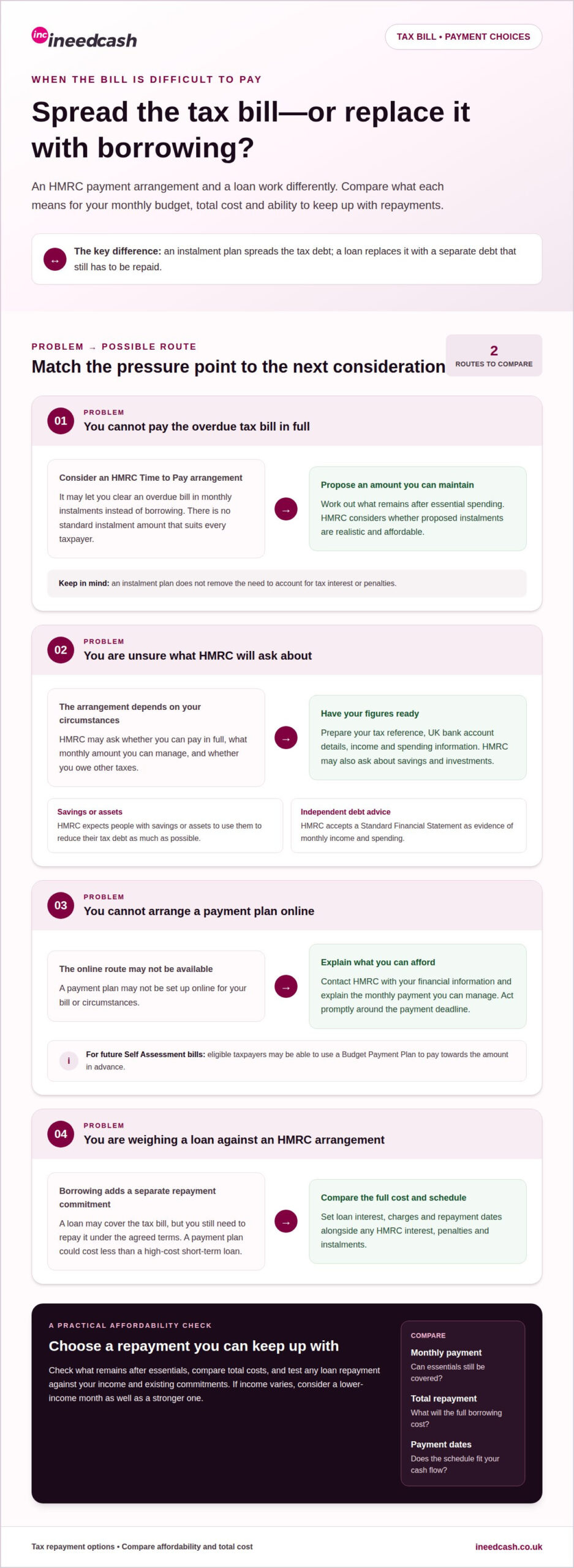
If you can’t arrange a payment plan online, HMRC may ask whether you can pay in full, what monthly amount you can afford, and about other taxes, income, spending, savings and investments. Borrowing can replace the immediate tax bill with a separate debt, so check that repayments are manageable before taking out a loan.
UK VAT late-payment penalties can be £200 when a taxpayer reaches the applicable threshold of late payments. Repeated late PAYE and National Insurance payments in the UK can incur penalties of 1% to 4% of the overdue amount. Consider these potential charges alongside the cost and repayment terms of any finance.
Repayment flexibility
An HMRC Time to Pay arrangement may let you clear an overdue tax bill in monthly instalments instead of borrowing. It could cost less than a high-cost short-term loan, but compare any tax interest and penalties with the loan’s interest and charges. An instalment plan spreads the tax debt; a loan replaces it with borrowing that still has to be repaid.
Eligibility depends on your ability to pay and whether the proposed instalments are realistic and affordable. Have your tax reference, UK bank account details, income and spending information ready. If you can’t set up a payment plan online, HMRC may ask whether you can pay in full, what monthly amount you can manage, and whether you owe other taxes. It may also ask about savings and investments.
There’s no standard instalment amount that suits every taxpayer. Work out what remains after essential spending, then propose a monthly payment you can maintain. HMRC expects people with savings or assets to use them to reduce their tax debt as much as possible. If you’ve received independent debt advice, HMRC accepts a Standard Financial Statement as evidence of monthly income and spending. Similarly, for individuals or business owners managing American liabilities alongside their UK obligations, professional resolution firms like US Tax Advocate Services LLC specialise in resolving overdue tax issues directly with revenue authorities.
Use HMRC’s online payment-plan route if it’s available for your bill. If you can’t arrange a plan online, contact HMRC with the information above and explain what you can afford. Since the plan is for an overdue bill, act promptly around the payment deadline. For future Self Assessment bills, eligible taxpayers may be able to use a Budget Payment Plan to pay towards the amount in advance. Instalments don’t remove the need to account for interest or penalties.
Comparing lenders
Compare the full cost and repayment schedule, not just the advertised rate. Your income, the amount borrowed and the HMRC payment deadline all affect which option may fit.
Borrowing options for an unexpected tax bill
Options in the UK include a personal loan, short-term borrowing, a credit card or a money transfer card. Before taking on new credit, compare borrowing with an HMRC payment arrangement. A card isn’t automatically cheaper than a personal loan: check interest, transfer fees and repayment periods. HMRC’s guidance on paying a tax bill in instalments can help you consider whether borrowing is necessary.
Personal loan rates and fees
There’s no single personal-loan rate or fee for every UK borrower. Lenders assess creditworthiness, income, the amount requested and the repayment term. Compare the APR, total amount repayable, monthly instalments and charges in each offer. A loan for an unexpected tax bill should cover the amount due and fit your budget. Make your decision based on the terms offered, not an advertised headline.
Compare offers by checking the total repayable and whether each monthly payment leaves enough income for essentials. Then check the final repayment date against HMRC’s deadline. A longer term may reduce monthly instalments but extend the period over which you pay interest. A shorter term may mean higher monthly payments, so assess affordability against regular income and existing commitments.
Before choosing a loan for an unexpected tax bill, list its interest, charges and repayment dates alongside the terms of any HMRC arrangement. Check that borrowing covers the tax payment without leaving too little for essentials. If your income varies, test repayments against a lower-income month as well as a stronger one. This helps you judge whether the total cost and schedule suit your cash flow.
Credit scores and loan eligibility
Lenders consider more than your credit score when assessing an application. For business borrowing, they may look at creditworthiness, business revenue and overall financial health. A stronger credit score can improve your chances of approval and access to lower interest rates. Before accepting a loan, compare the monthly payment with your income and existing commitments.
Your credit score is one part of a lender’s assessment, alongside your finances and ability to repay. Bad Credit Loans may be an option if you have a poor credit history, but affordability still matters. For example, regular income can support a repayment plan, while existing debts reduce the money available each month. Use the actual repayment figures, not an advertised headline, to judge whether you can keep up.
Payday borrowing may help meet an urgent HMRC deadline, but it creates a second bill: the loan, interest and charges. A short repayment period can squeeze cash flow, particularly if wages or business income arrive later. A secured loan carries a different risk: if it’s secured against your home, missed repayments can put your home at risk. Consider these consequences before borrowing to pay tax.
Before assessing an offer, set out the tax payment, monthly income, essential spending and credit commitments. Check the total repayable, payment dates and whether the schedule works in a lower-income month. Clear records of income and outgoings can help show lenders your ability to repay. If instalments would leave too little for essentials, an HMRC payment arrangement may suit your circumstances better than further borrowing.
HMRC may ask company directors to put personal funds into the business, borrow money or extend credit to address company tax debt. These are different approaches, so compare their terms and affordability before deciding. Set out whether the funds would come from the director personally, be borrowed or be provided as credit, then assess any repayments alongside income, essential spending and existing commitments. Consider whether the approach remains manageable without leaving too little for essentials. The aim is to address the company’s tax debt without taking on repayments the available finances can’t support.
I Need Cash
If an HMRC payment deadline is approaching and instalments don’t fit your circumstances, I Need Cash can help you explore borrowing options. As a credit broker, it matches applicants with products from independent lenders. This gives you another route to consider alongside the tax-payment options above, without treating a loan as the only answer.
Start with the amount you need and a realistic monthly repayment. Consider your income, essential costs and other credit commitments, then check whether borrowing would leave enough cash flow for regular bills. A loan may not suit you if repayments would put those essentials under pressure. The total repayable and schedule matter as much as receiving funds before the tax deadline.
Depending on your circumstances, options may include Personal Loans, Short Term Loans or Bad Credit Loans. Homeowner Loans are another option, but borrowing against your home means missed repayments could put it at risk. Lenders set their own criteria and terms. Your credit history, income and affordability can affect which options are available and the terms offered.
When you’re ready to explore borrowing, provide accurate details about your finances and the tax amount. I Need Cash uses your application information to match you with relevant options from its lender network. Review any offer carefully, including the repayment amount, term, interest and charges, before deciding. If an HMRC payment arrangement is more manageable, compare it before taking on credit. Choose the next step that fits your budget and allows you to keep up with repayments.
If you’d like to discuss your options, contact I Need Cash.
Frequently Asked Questions
What is an income tax loan?
An income tax loan is borrowing used to pay an income tax bill, with repayments made to the lender under agreed terms. It doesn’t remove the tax debt; it replaces an immediate payment with credit and a separate repayment commitment. Before borrowing, compare the lender’s total repayment and schedule with an HMRC payment arrangement and your available monthly budget.
What types of personal loans can be used to pay a UK tax bill?
Options may include an unsecured Personal Loan, Short Term Loan or payday loan. A Homeowner Loan is secured against property, so missed repayments can put your home at risk. These products differ in repayment schedules, interest and security. Compare the total amount repayable and whether each instalment fits your income, rather than choosing by product name alone.
Can I get a loan for a tax bill with bad credit or self-employed income?
Bad credit doesn’t determine whether a loan is affordable, but lenders assess creditworthiness alongside income and financial circumstances. I Need Cash can connect applicants with options including Bad Credit Loans through independent lenders. For self-employed applicants, lenders may assess financial records and income patterns. Approval and terms depend on the lender’s criteria, so consider whether repayments remain manageable when income varies.

Article by
Mandy Paige
Social Content Writer and Blogger
Mandy has been writing for various website for a number of years, especially for companies in the consumer finance industry. She started her career guiding customers wanting help when applying for finance at a Loan Brokerage. Speaking to individuals wanting guidance, it lead her to start writing help and guidance on finding the right solution for their needs. Outside of writing, she is a wiz with a pair of scissors as she originally trained as a hairdresser.
Disclaimer
The content of this article/blog was correct to our knowledge on the date/time it was published.