 Skip to content

Understanding Loan APR and the Total Cost of Credit: A UK Guide for 2026
- Michelle
- Finance
That 6.2% APR you’re seeing? It’s not guaranteed. With the Bank of England keeping rates at 3.75% in April 2026, you should know what you will pay. Do this before you sign anything.
APR isn’t just a number—it’s your comparison tool. The total cost of credit is your actual bill in pounds and pence. Master both, and you’ll never overpay for borrowing again.
Takeaways
- Decode how APR bundles interest and fees together so you can compare different loan types with total clarity.
- Understand the “51% Rule” to manage your expectations regarding representative rates versus the personal APR you’re actually offered.
- Master understanding loan APR and total cost of credit to identify the exact amount in pounds you’ll repay over the life of the loan.
- Access a step-by-step comparison checklist to help you secure the most cost-effective deal for your specific financial circumstances.
- Learn how to use real-world figures to confirm monthly affordability and ensure your application is successful without any hidden surprises.
Table of Contents
-
Take Control Now
What APR Actually Means
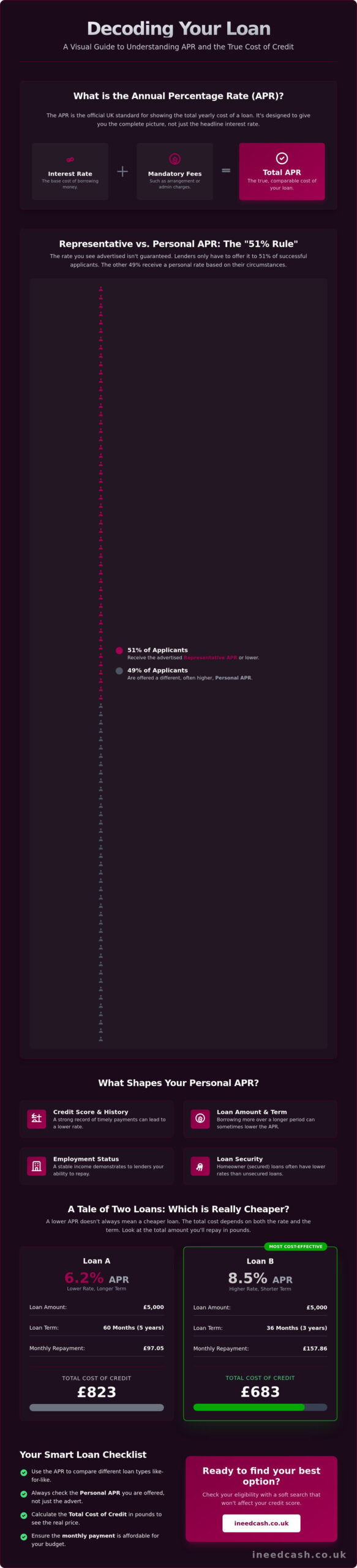
APR is the complete yearly cost of your loan. It includes interest plus every mandatory fee the lender charges. The Financial Conduct Authority requires lenders to show this figure so you can compare deals properly.
Think of it this way: the interest rate is the base price. APR is what you actually pay after arrangement fees, admin charges, and everything else gets added. If you can afford it, you should always check the APR first.
Interest Rates vs APR: Know the Difference
The interest rate covers the principal you’re borrowing. APR shows the real cost. A lender might advertise a tempting 5% interest rate, but if they’re charging £200 in setup fees, the APR tells the truth. It’s blown expectations out of the water for borrowers who thought they were getting a bargain.
Why Short-Term Loan APRs Look Astronomical
Payday loans show APRs in the hundreds or thousands. This happens because regulations force lenders to annualise the cost. A 30-day loan gets stretched to show what you’d pay over 12 months. It’s misleading.
Focus on the cash amount instead. A £100 loan that costs you £125 to repay over a month is a £25 charge—not the 300% APR the paperwork shows. The actual pounds matter more than the percentage.
Representative APR vs Your Personal Rate
Here’s what most people miss: that advertised rate isn’t necessarily yours. Under the “51% Rule,” lenders only need to offer the representative APR to just over half of approved applicants. The other 49%? They pay more.
Your credit score determines which group you fall into. If you’ve missed payments or have limited credit history, expect a higher personal APR. This isn’t just about fairness—it’s about risk.
What Affects Your Personal APR
Your credit score is the biggest factor. Lenders check your repayment history, existing debts, and how you’ve managed credit in the past. The loan amount and term length matter too. Borrowing £5,000 over five years typically gets you a better rate than £500 over three months.
Homeowner loans offer lower APRs because they’re secured against your property. Unsecured personal loans cost more because the lender takes on more risk. These are the only factors that truly matter.
How Credit Brokers Find You Better Deals
A credit broker, like I Need Cash, searches multiple lenders on your behalf. If you’re looking for bad credit loans, this is the fastest route to a yes. Most brokers now use soft searches—they check your eligibility without damaging your credit score.
This isn’t just about convenience; it’s about conversion. One application, multiple offers, zero impact on your credit file until you accept a deal.
Calculate Your Total Cost in Real Money
Percentages don’t pay bills. Pounds do. The total cost of credit is simple: it’s everything you pay back minus what you borrowed. This is the figure that matters for your monthly budget.
According to 2026 data, UK households now prioritise monthly repayment amounts over APR when choosing credit. They’re right to do so.
APR vs Total Cost: A Real Example
A personal loan at 10% APR over five years might look cheaper than a short-term loan at 50% APR. But time changes everything. That five-year loan means 60 months of interest payments. The short-term loan at 50% might only last three months.
The “expensive” short-term loan could cost you £150 in total. The “cheap” long-term loan? You might pay £2,000 in interest over five years. Always check the total repayment figure.
Fees That Inflate Your Bill
Homeowner loans might include valuation or legal fees that sit outside the headline rate. Read the fine print. If you want certainty, calculate your total repayment before you commit.
How to Secure the Best Deal
Check the APR to compare lenders fairly. Verify the total cost to see your actual bill. Confirm the monthly repayment fits your budget. These are the only three steps you need.
Prepare Your Application Properly
Gather your bank statements and proof of income before you apply. Check your credit report through Experian or Gov.uk for errors. Correcting mistakes now means better rates later.
Lenders want to see stability. Three months of steady income and a clean recent payment history can help you get the best personal APR for you.
Why Transparency Matters
We work with FCA-regulated lenders across the UK. Our panel includes specialists in homeowner loans and bad credit solutions. We use soft searches to protect your credit score while you compare options.
This isn’t just about finding you a loan—it’s about finding you the right loan. No hidden fees, no surprises, no impact on your credit file until you’re ready to proceed.
Take Control Now
You now understand how APR works and why the total cost matters more than percentages. The 51% rule means advertised rates aren’t guaranteed, but knowing your credit position gives you power.
Stop guessing. Check your eligibility today without affecting your credit score. We’ll show you exactly what you’ll pay in pounds and pence before you commit to anything.
Your financial clarity starts here.
FAQs
Is a lower APR always the best choice?
Not always. A low APR over many years can cost more in total interest than a higher APR over a short term. Check the total repayment amount—that’s what actually leaves your bank account.
What exactly is the total cost of credit?
It’s your final bill minus the amount you borrowed. Every mandatory fee and interest charge is included. This is the real number that affects your monthly budget.
Does APR include all fees?
APR covers mandatory charges like arrangement fees. It doesn’t include optional extras like payment protection insurance or penalty fees for late payments. Always read the terms for the complete picture.
Why is my personal APR higher than the advertised rate?
The 51% rule allows lenders to offer the representative rate to just over half of approved applicants. Your personal APR reflects your credit history and risk profile. Get a quote to see your actual rate.
Can I get a loan with bad credit?
Yes. Specialist lenders focus on your current situation rather than past mistakes. The APR might be higher, but if the monthly payments are affordable and you need the funds, it’s a viable option. We work with lenders who specialise in bad credit loans to find you a fair deal.
Related links:
Loan calculator UK: Plan your borrowing and take control
Cheapest personal loans UK bad credit: A comprehensive guide
Guide to Car Loan and interest rates
Navigating 10000 loan and bad credit

Article by
Mandy Paige
Social Content Writer and Blogger Mandy has been writing for various websites for a number of years, especially for companies in the consumer finance industry. She started her career guiding customers who needed help when applying for finance at a Loan Brokerage. Speaking to individuals seeking guidance led her to start writing help and advice on finding the right solution for their needs. Outside of writing, she's a whizz with a pair of scissors as she originally trained as a hairdresser.
Disclaimer
The content of this article/blog was correct to our knowledge on the date/time it was published.