 Skip to content

Choosing Your Perfect Car: A Smart Guide to Best Loans for Cars
- Emma
- Car Finance
Estimated reading time: 13 minutes
Summary
- Smart shopping can save you money on the best loans for cars, but comparing financing options is crucial.
- Choosing the right vehicle impacts your borrowing amount and loan eligibility; assess your needs before deciding.
- Consider different loan options, such as personal loans, hire purchase, and leasing, as each has unique benefits.
- To find the best car loans, compare rates, use a loan calculator, and check your credit score beforehand.
- Even with bad credit, options like secured loans or co-signers can make car ownership possible.
Contents
It’s important to realise that smart shopping could save you thousands when looking for the best loans for cars.
Most buyers spend hours negotiating the car price but accept whatever financing the dealer offers first. Of course, this mistake can get pricey! Car loan rates change a lot between lenders, so it’s smart to compare options. Ultimately, this can save you a lot of money. Not to mention, using a car loan calculator helps you understand your monthly payments before you sign anything.
In reality, your credit score might not be perfect – but don’t let that discourage you. There are good options available, like special car loans for people with bad credit. These loans can fit various financial situations.
With this in mind, the right financing matters just as much as picking the perfect car. Those monthly payments will stick around for years.
This guide will help you learn how to get the best loans for used cars. We will help you find good APR rates and manage the financing process with ease.
Start with the Right Car Choice
First thing to remember is pick the right vehicle first, before you think over car loan finance options. Your choice of car will affect how much you need to borrow and what car loans you’ll qualify for.
Match the car to your lifestyle
For example, your car should feel like it’s part of your life, not just something that gets you around. You need to assess what you really need from a vehicle before you start looking at showrooms. Make a list of three must-have features to help narrow down your search.
To be sure, ask yourself these questions about your daily routine:
- What are your priorities? Do you need family space, good fuel mileage, or maybe even a sporty feel?
- Do you have specific needs like towing or fitting into small parking spots?
- Will you mostly drive in the city or take long trips on highways?
Additionally, the people who’ll use the car matter too. A two-seater convertible won’t work if you’re starting a family. A seven-seater might be too much for just one or two people. To demonstrate, one study shows that rear-seat legroom is one of the top three things that make people happy with their car’s design.
Think about fuel type and efficiency
Certainly, the type of fuel you choose will impact your running costs and the environment a lot. Today’s market offers six main options:
- Petrol – Best for short trips and city driving
- Diesel – Great for long distances, motorway driving, and towing
- LPG (Liquefied Petroleum Gas) – Costs less than regular fuel but needs vehicle conversion
- Biofuels – Mixed with regular fuels to help the environment
- Electric – No exhaust emissions and lowest running costs
- Hybrid – Uses both regular engines and electric motors to save fuel
In general, small engines usually use less fuel and work well for city driving. They struggle more at high speeds though, which makes them less efficient on highways.
On a positive note, research shows that battery electric vehicles produce less greenhouse gas than any other type of vehicle, even when we consider how electricity is made.
As a result, your engine choice might get you better car loan rates. In fact, some lenders offer better deals for eco-friendly vehicles.
Think about size, space, and comfort
The size of your car affects everything from how it handles to how much fuel it uses and how comfortable it feels. You need to balance what works with what you like.
For this reason, here’s what to think about with size:
In essence, parking space is vital – bigger cars give you more comfort and storage but can be tough to park. A 2023 report shows that SUVs made up more than 46% of all new passenger cars worldwide, showing people want more space.
City folks might like smaller cars that are easy to park and drive around. Meanwhile, people in rural areas often prefer SUVs that can handle rough roads better. Families with kids usually find MPVs or SUVs work best for them.
A standard U.K. parking space is approximately 2.4m by 4.8m. Given that, make sure your new car will fit where you plan to park it regularly.
It must be remembered, bigger cars mean bigger loans. Finding the right balance between what you want and what fits your budget helps you get the best APR loans for cars.
Know Your Financing Options
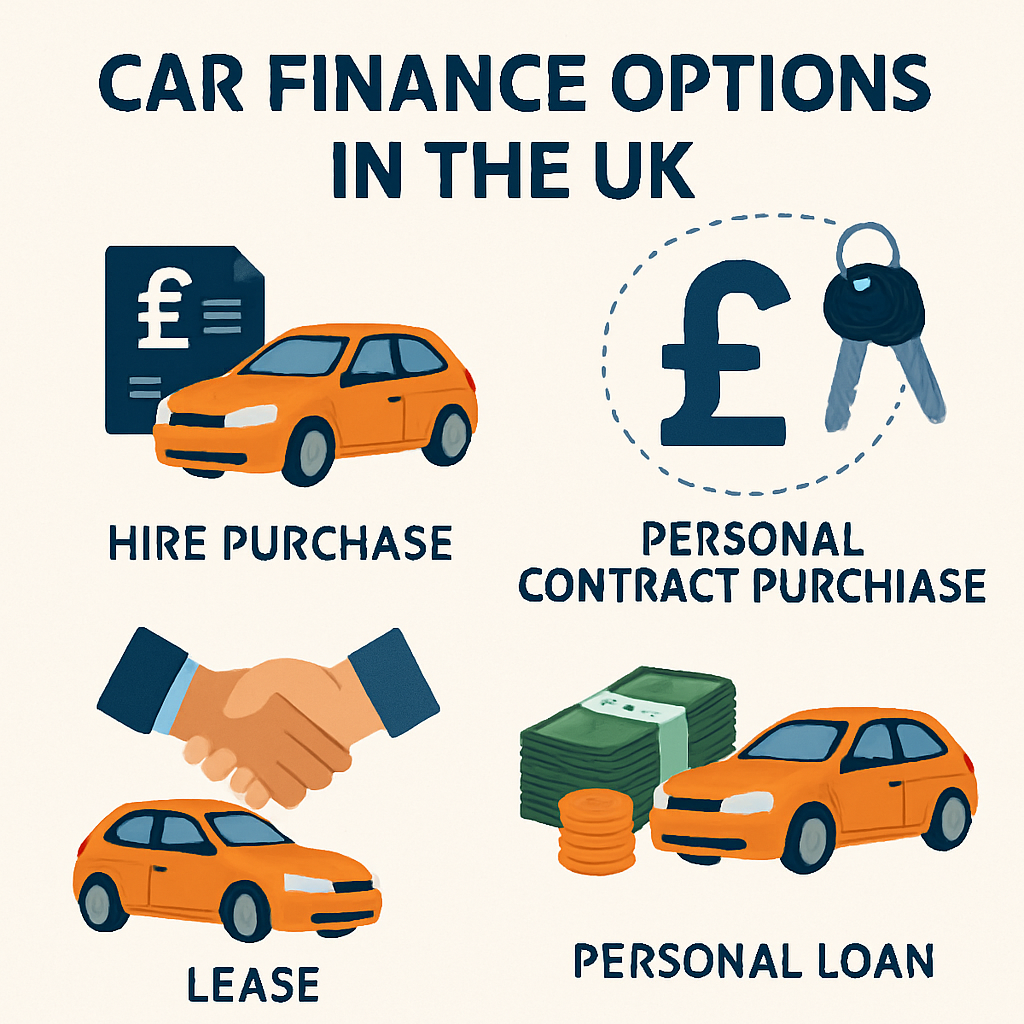
Smart decisions about car financing start with knowing your options. In other words, you can pay for your next vehicle in different ways. Each method has benefits that depend on your needs.
Loan for cars: what are your choices?
In particular, you’ll find these four main paths when you look at car finance options:
- Personal Loans – You can own the car right away and spread your payments. These loans can be unsecured, which means you don’t need to provide collateral. They can also be secured by your car, which might be easier to get if your credit score is low.
- Hire Purchase (HP) – The car stays hired until you pay it off. You’ll need a deposit (usually 10% or more) plus fixed monthly payments. The vehicle becomes legally yours only after your final payment.
- Personal Contract Purchase (PCP) – This option requires a deposit and monthly payments to cover the car’s loss of value. You can return the car, make a final payment to keep it, or trade it in when you’re finished.
- Leasing/Personal Contract Hire – Think of this as a long-term rental where the car never becomes yours. Your regular payments depend on the car’s value, how long you want it, and your agreed mileage limit.
Hire purchase vs personal contract purchase
Even though HP and PCP might look similar at first, they work quite differently:
HP gives you a clear path to ownership. Your monthly costs run higher because you’re paying for the whole car. To clarify, the car becomes yours without extra costs after your last payment.
Alternatively, PCP keeps your monthly payments lower since you only pay for loss of value. The deal ends with three choices: pay the balloon payment and keep the car, give it back, or start fresh with a new PCP deal.
In addition, PCP deals come with mileage caps and condition rules that HP doesn’t usually have. Going over these limits or bringing back a damaged car means extra charges.
Leasing vs buying: pros and cons
In this case, your priorities and driving habits will help you decide between leasing and buying.
Leasing advantages mean lower monthly costs, a new car every few years, and less worry about loss of value. The warranty usually covers most maintenance during your lease.
Buying lets you build equity in your car. You can drive as many miles as you want and can change your car however you like. Furthermore, once you pay off the loan, you won’t have car payments anymore.
At the present time, new buyers should know that leases usually limit your annual mileage (typically 10,000-15,000 miles) and require good car maintenance. All in all, breaking a lease early costs a lot, while owning gives you more flexibility to sell.
Even so, car fans who enjoy new tech will find that leasing is a good option. It allows them to get a new vehicle every few years without the hassle of selling their old one.
How to Find the Best Car Loan
On balance, finding the best car loans takes research and careful comparison. After all, a slight difference in interest rates could save you thousands throughout your loan term.
Compare car loan rates from lenders
By and large, your chances of finding better deals increase if you look at multiple sources. Here are the main places to check:
- Banks and credit unions
- Online lenders
- Dealership financing
- Comparison websites
Each option brings something different to the table. To cite an instance, personal loans often cost less if you have a good credit rating. More than that, comparison tools let you view offers from providers of all sizes at once, which helps spot the best car loan rates.
Overall, your credit history largely determines the loan rate you qualify for. A healthy credit record helps secure the lowest APR. Whatever your situation might be, a better credit score boosts your chances of getting lower car loan rates.
Use a car loan calculator to estimate payments
To begin with, car loan calculators give you a clear picture of costs before you sign anything. These tools show you:
- Monthly payment amounts
- Total interest paid over the loan term
- Total amount repayable
The calculator needs the car’s full price, your deposit amount, and your preferred loan term to work properly. It then displays your potential APR and estimated monthly payments.
For example, if you borrow £13,000 for 48 months, your monthly payment would be £303.80. In total, you would repay £14,592.40 at a 5.9% APR.
Look for the best APR loans for cars
The Annual Percentage Rate (APR) shows the true borrowing cost, including interest and fees. Over the last several years, personal loan rates have gone up, making comparison more important than ever.
Note that advertised rates aren’t guaranteed – lenders show representative APRs, which only 51% of successful applicants receive. The other 49% might see higher rates.
Usually, your car loan rates depend on several key factors:
- Loan amount – Rates typically drop as you borrow more
- Loan term – Longer terms reduce monthly payments but increase total interest
- Your credit score – Better scores usually mean better rates
The best strategy is to pay off your debt quickly to keep interest costs down. You might want to make a larger deposit if you can. Bear in mind, borrowing less can give you better rates and lower costs.
Smart Tips for Loan Approval
The right preparation before applying can boost your chances of getting the best car loans. You need to make yourself an attractive borrower, beyond just looking at available options. Here’s what you should do to get your loan approved.
Check your credit score first
Essentially, your credit score shapes what car loan rates lenders will offer you. Lenders look at this three-digit number to review how well you deal with credit and to set your interest rate. Better scores usually lead to better loan terms.
Meanwhile, checking your credit doesn’t take much effort. You can get reports from the UK’s three main credit reference agencies: Experian, Equifax, and TransUnion. Take time to check these reports for mistakes because small errors like old addresses can hurt your score. However, you should contact the agency right away if you spot any wrong information.
Documents you need to apply
Your car loan application needs specific documents. You’ll need to provide:
- Proof of identity (valid UK driving licence or passport)
- Proof of address (recent utility bill or council tax statement)
- Proof of income (recent payslips or bank statements)
- Three years’ address history
Presently, most lenders ask for two to three recent payslips to show steady income. If you are self-employed, you should have clear income documents, like tax returns, prepared.
How to negotiate better loan terms
Many people don’t know they can negotiate loan terms. First of all, begin by collecting quotes from various lenders. This will help make your case stronger. Notably, a larger deposit can lower your interest payments and overall costs.
Next, feel free to ask lenders about better interest rates – they often have room to adjust their offers. Shorter loan terms might mean higher monthly payments but can save you money on total interest.
Finally, walking away can be your best move in negotiations. If a lender wants high rates or adds too many fees, think about ending the talk.
Dealing with Bad Credit or Low Income
On the whole, you can still own a car even with a less-than-perfect credit score or modest income. Knowing the right financing options can really help you get transportation, even if money is tight.
Understanding bad credit car loans
A low credit score won’t automatically stop you from getting vehicle financing. We found that it mostly affects your interest rates. It may also limit the lenders you can use.
In light of this, many lenders focus on bad credit car loans. They assist people with special financial situations, like those with CCJs or IVAs. Your chances of getting approved depend on your credit history and income. However, lenders also consider other things besides your credit score.
Secured vs unsecured loans
Secured loans let you use your car as collateral, which makes them easier to get if you have damaged credit.
The car acts as security, which lowers the lender’s risk. Because of this, you often see lower interest rates than with loans that are not secured. Just remember that missing payments could mean losing your vehicle.
In contrast, unsecured loans do not require collateral. Then again, they have higher interest rates because the lender faces more risk.
Co-signers and other options
A point often overlooked is that you can add a co-signer’s credit profile to your application which could help you get better loan terms. The co-signer becomes legally responsible to make payments if you can’t. This setup works great for first-time borrowers or people working to rebuild their credit.
Other alternatives include:
- Making a bigger down payment to lower risk
- Looking for lenders who work with benefits-based income
- Finding a guarantor who’ll cover payments if needed
Conclusion
Getting the best car loans doesn’t need to feel overwhelming. This information helps you make better choices based on your money and lifestyle.
As shown, your choice of car affects the financing you’ll need. Nonetheless, take time to find a car that fits your needs. Check the fuel mileage and think about the size. This will help you avoid issues when talking to lenders later.
Knowledge of different financing options gives you an edge. Hire purchase is direct, PCP offers flexibility, and leasing is straightforward. Each option meets different needs and priorities.
Remember, comparing rates from multiple lenders and using car loan calculators helps you find the most affordable deal.
In particular, your credit score is a vital factor in loan approval and interest rates. Checking and improving your score before applying can lead to big savings over your loan’s lifetime. Good paperwork and strong haggling skills can help you get better rates.
Surprisingly, bad credit shouldn’t stop you. If you have bad credit, you can still buy a car. Options like bad credit car loans, secured financing, or getting a co-signer may help you. These can make car ownership possible even if you have money issues.
Patience makes a difference when looking for car financing. The first offer isn’t always the best – shop around and compare options. This strategy usually leads to better terms and real savings over time.
As can be seen, the right car and financing can change your budget and life. With this knowledge in hand, you can drive away in a car you love, with a loan that fits your wallet.
Related links