 Skip to content

Winter Fuel Payment 2026: The Complete Guide to Eligibility and Rules
- Michelle
- Finance
Did you know that whilst 9 million pensioners are set to receive support this year, the new £35,000 income threshold means 40% of recipients may face a tax-back surprise? It’s natural to feel anxious about heating your home on a fixed income, especially when the rules for the winter fuel payment seem to shift every season. You want clear answers, not more confusion; you certainly don’t want to miss the 21 September 2026 qualifying week deadline.
We’re here to help you stay in control of your finances on your terms. You’ll learn exactly how much you’ll get, whether it’s the £200 or £300 rate, and how the new income rules affect your bank balance. We’ll break down the 27 June 1960 eligibility cutoff and the vital deadlines you need to hit to ensure your peace of mind this winter. We even cover the 20 September opt-out date and how to claim for previous years before the 31 March 2026 deadline. Get the facts today and stop worrying about the cold.
Key Takeaways
- Confirm if you meet the 27 June 1960 birth date requirement and see how the £35,000 income threshold affects your final support amount.
- Discover the exact 2026/2027 winter fuel payment rates, which range from £100 to £300 depending on your age and living situation.
- Learn how to track your automatic payment through the October notification letters and the steps to take if your funds haven’t arrived by January.
- Stay in control of your seasonal budget by understanding the tax-back rules and exploring options for larger energy-saving home improvements.
What is the Winter Fuel Payment 2026 and Why Does it Matter?
The winter fuel payment is far more than just a government benefit; it’s a vital tool for maintaining financial fluidity when temperatures drop. For the 2026/27 season, this tax-free lump sum provides between £100 and £300 to help seniors cover rising heating costs. This support is essential for the 9 million pensioners across the UK who rely on it to keep their homes warm without sacrificing other essentials. For a deep dive into the scheme’s history and its role in the UK welfare state, you can check the Winter Fuel Payment Wikipedia entry. Our ethic at I Need Cash is built on helping you stay in control on your terms. We know that managing a fixed income requires precision, especially with the 2026 shift to a universal-but-taxed model.
Key Dates for the 2026/27 Winter Season
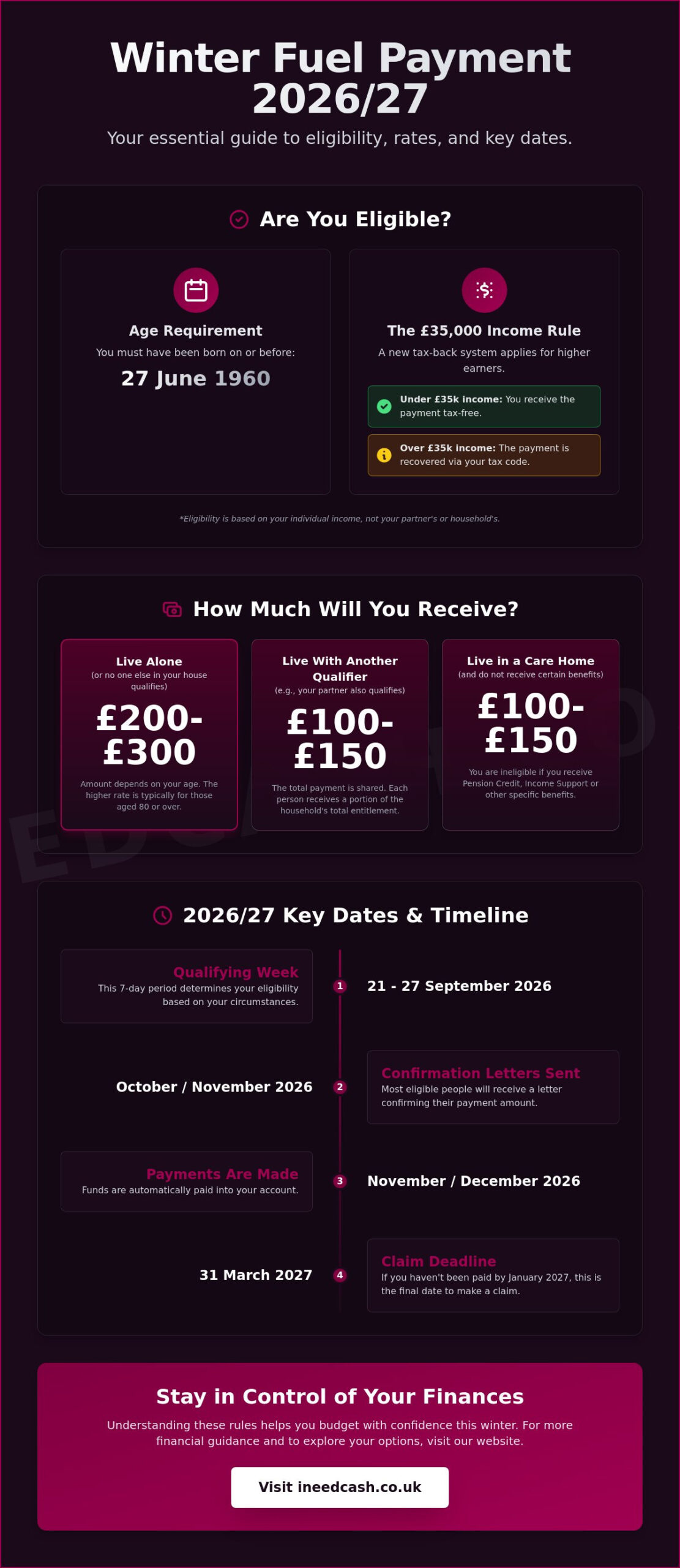
Timing is everything. You must have been born on or before 27 June 1960 to qualify for this year’s support. Mark 21 to 27 September 2026 in your calendar; this is the qualifying week. The qualifying week is the specific seven-day period that determines your eligibility for the entire winter based on your living circumstances and age at that time. Most households will receive a confirmation letter in October or November. Expect the funds to land amongst your other income throughout November and December. If you haven’t seen the money by January 2027, you have until 31 March 2027 to make a claim.
Universal Access vs. High-Earner Recovery
The 2026 rules represent a significant pivot in policy. Every person of State Pension age is now initially entitled to the payment, removing the stressful barriers of the 2024 Pension Credit requirements. However, the government now uses a recovery mechanism for those with an annual income exceeding £35,000. If you sit above this line, the payment is effectively recovered via your tax code or Self-Assessment tax return. This ensures the 2026/27 scheme remains fiscally responsible whilst providing immediate peace of mind for the 60% of pensioners who fall below the threshold. It’s about getting the help you need today without the fear of hidden rules tomorrow.
Stay ahead of the curve. Understanding these rules early allows you to budget with confidence. Whether you are living alone or with a partner, knowing your tier ensures you aren’t left guessing when the first frost hits. If you need more significant help with home efficiency, you might even consider how homeowner loans can fund long-term upgrades like new boilers or insulation to keep costs down for good.
Understanding Eligibility: The £35,000 Income Rule Explained
Getting the right support starts with knowing if you qualify. For the 2026 cycle, the basic rule is simple. You must have been born on or before 27 June 1960. If you meet this age requirement, you’re eligible for the winter fuel payment. However, the new “tax-back” rule has created some anxiety. If your individual annual income is over £35,000, the government will recover the payment. This isn’t a judgment on your success. It’s just how the system now targets help towards the 60% of pensioners on lower incomes. Best of all, your partner’s income doesn’t affect your personal eligibility. Even if they earn a fortune, your entitlement stays based on your own figures.
What Counts as Income for the HMRC Threshold?
Confusion often stems from what HMRC actually counts as “income.” It’s not about how much your house is worth or what’s in your ISA. The £35,000 limit is based on individual gross taxable income, not household wealth. This includes your State Pension, any private or workplace pensions, and taxable savings interest. If you cross that £35,000 line, HMRC will usually recover the funds by tweaking your tax code. You won’t need to write a cheque. It happens automatically through your tax contributions, keeping things simple and stress-free. For the latest details on how these calculations work, the Official Winter Fuel Payment guidance is your best resource.
Special Circumstances: Care Homes and Hospitals
Life can be unpredictable, and the rules change if you aren’t in your own home. If you’ve been in hospital for more than 52 weeks, you’ll lose your entitlement for that year. For those in care homes, the rules are specific. You can usually get £100 or £150, but only if you don’t receive benefits like Pension Credit or Income Support. If you live with another person who qualifies, the total payment is shared amongst you. For instance, two eligible people living together might each receive £100 instead of one person getting £200. This ensures everyone gets a fair slice of the support available. Being in the know helps you stay in control on your terms. If you want to get started on a more secure financial path this winter, understanding these nuances is essential.
How Much Will You Receive? 2026 Payment Rates
Knowing your exact entitlement is the first step to financial peace of mind. The winter fuel payment isn’t a flat rate for everyone; it’s a tiered system based on your age and who you live with. If you were born before 28 September 1946, you qualify for the “Age 80” boost. This higher tier recognises that older residents often face higher heating requirements. According to the House of Commons Library research, these specific age thresholds are vital for targeting support effectively. It’s also important to remember that this support works alongside the £150 Warm Home Discount and any Cold Weather Payments triggered by freezing temperatures. You don’t have to choose one over the other; they’re designed to stack up and protect your budget.
Payment Tiers by Age and Household
Your living situation during the qualifying week of 21 to 27 September 2026 dictates your final payment. Here is how the numbers break down for most households:
- Scenario 1: Living alone (or with people who don’t qualify). You’ll receive £200 if you were born between 28 September 1946 and 27 June 1960. If you were born before 28 September 1946, you’ll receive £300.
- Scenario 2: Living with another eligible person. If you both fall in the younger bracket, you’ll each get £100. If one of you is in the older bracket, the younger person gets £100 whilst the older person receives £200. If you’re both in the older bracket, you’ll each receive £150.
- Scenario 3: Living in a care home. You’ll receive £100 if you’re in the younger bracket or £150 if you’re in the older bracket, provided you aren’t receiving other means-tested benefits.
The Scotland Exception: Pension Age Winter Heating Payment
If you live in Scotland, the rules change. You won’t receive the standard UK winter fuel payment. Instead, Social Security Scotland manages the “Pension Age Winter Heating Payment.” Whilst the goal is the same, the application process and specific eligibility dates can differ. The Scottish government maintains its own system to ensure support is tailored to the unique climate challenges north of the border. Always check your local authority’s guidance if you’ve recently moved amongst the home nations.
Be in control on your terms by ensuring the DWP has your most recent details. If you’ve moved house or your bank details have changed since last year, tell them today. Most payments are automatic, but a simple error in their system could delay your funds until the 31 March 2027 deadline. If you’re looking to get started with a clearer seasonal budget, knowing these tiers is the best place to begin.
How to Claim: Automating Your Winter Support
Getting your hands on your winter fuel payment is designed to be effortless. If you already receive a State Pension or other social security benefits, you usually don’t need to lift a finger. The system is built to recognise your eligibility automatically. Keep a sharp eye on your post during October and November. You’ll receive a confirmation letter stating exactly how much you’re due and which bank account the funds will enter. This letter is your proof of support, so keep it safe amongst your other financial records. Most people see the money land in their accounts by December, providing that vital boost when the frost starts to bite.
Step-by-Step Manual Application Process
Not everyone gets an automatic payout. If you live abroad in an eligible country or don’t receive a State Pension, you may need to take action. Don’t let the paperwork stress you out; we’re here to help you navigate the process with ease. Gather your essentials before you start to ensure a smooth application. You’ll need your National Insurance number, your bank or building society details, and the date you were married or entered a civil partnership if applicable. Use the online claim form for the fastest results, or opt for a postal application if you prefer a paper trail. Remember, the hard deadline for the 2026/27 season is 31 March 2027. Apply today to ensure you don’t miss out on the support you deserve.
- Check your status: Verify if you’ve received a payment in previous years.
- Gather data: Have your NI number and bank details ready.
- Choose your method: Use the GOV.UK portal or call the Winter Fuel Payment Centre on 0800 731 0160.
- Submit early: Beat the winter rush by claiming as soon as the window opens in September.
Reporting Changes and Avoiding Scams
Staying in control on your terms means keeping the DWP informed. If you move house or change your bank account, tell them immediately. Delays often happen because of outdated information, and you want your “financial ally” to have the right facts. Be extremely cautious of “Winter Fuel” scams that circulate during the colder months. The government will never send you a text message asking for your bank details or a “processing fee” to release your payment. These are always fraudulent. Protect your personal data with the same care you’d use for your home. If a message feels urgent or suspicious, delete it and check the official channels instead. You can get started on securing your broader financial future by staying vigilant and informed today.
Beyond the Payment: Managing Seasonal Financial Pressure
While the winter fuel payment provides a welcome cushion, it doesn’t always cover the full reality of British winters. A £300 payment is a great start, but it won’t fix a burst pipe or a condemned boiler in the middle of January. When the temperature drops below zero, you need more than just a benefit; you need financial fluidity. If your winter fuel payment doesn’t cover the gap between your income and rising energy costs, it’s time to think bigger. You can use homeowner loans to fund major upgrades like double glazing or modern insulation. These improvements lower your bills for years to come, turning a seasonal struggle into long-term savings. It’s about being proactive rather than just reactive.
Emergency Repairs and Unexpected Costs
Boiler breakdowns don’t wait for your pension to arrive. A cold house is a health risk, especially for those in the “Age 80” bracket we discussed earlier. If you’re facing an immediate emergency freeze, short-term loans can bridge the gap instantly. These solutions provide the cash you need today to get the heating back on tonight. We believe in a “financial ally” mindset. This means balancing your immediate safety with your long-term financial health. Don’t let a temporary shortfall become a permanent crisis. By using a broker, you can compare a wide panel of lenders to find the most competitive rates available amongst the market.
Modern finance is changing for the better. We champion the use of open banking loans because they offer a faster, fairer assessment of your situation. Instead of relying solely on outdated credit scores, lenders look at your real-time affordability. This technology empowers you to get a decision in minutes, not days. It’s the “I Need Cash” ethic in action: providing transparency and speed when you need it most. You shouldn’t be judged on past mistakes; you should be supported based on your current ability to manage your money on your terms.
Take Control of Your Terms Today
We are your non-judgmental partner in navigating seasonal credit. Why settle for the first offer you see? Using a broker gives you access to multiple lenders with a single, rapid search. This ensures you stay in control, choosing the loan that fits your specific budget and timeline. Whether you’re covering an energy shortfall or investing in property repairs, the choice is always yours. Stop worrying about the “what ifs” of winter and start building a plan that works for your household. Get started today and find the financial support you need to stay warm and worry-free.
Secure Your Peace of Mind This Season
You now have the facts to master your seasonal budget with total confidence. Remember the 27 June 1960 birth date cutoff and the £35,000 income threshold to avoid any tax-back surprises later in the year. Whether you’re expecting an automatic payment in November or preparing a manual claim before the 31 March 2027 deadline, you’re now ahead of the curve. Your winter fuel payment is a vital foundation, but it isn’t your only option for staying warm whilst keeping your finances fluid. Most households will see their support arrive amongst their usual income, but having a backup plan is just smart thinking.
We want to help you stay in control on your terms. We’re FCA Authorised and Regulated, offering a free service with no obligation quotes. Our wide panel of independent UK lenders is ready to help you bridge any gaps in your energy budget. Quotes won’t affect your credit score, so you can explore your choices risk-free. Don’t let financial anxiety frost your windows this year. Get the help you need today and enjoy a warmer, more secure home.
Be in control on your terms: Find a loan that fits your winter budget
Take charge of your comfort today. We’re here to be your financial ally throughout the coldest months and beyond.
Frequently Asked Questions
How much is the Winter Fuel Payment for 2026/27?
You’ll receive between £100 and £300 depending on your age and household circumstances during the qualifying week. If you were born between 28 September 1946 and 27 June 1960, the standard rate is £200. Those born before 28 September 1946 receive the higher £300 rate. These amounts are often split if you live with another eligible person or in a care home.
Is the Winter Fuel Payment automatic if I get a State Pension?
Yes, most people receive their support automatically without needing to fill out any forms. If you get the State Pension or another social security benefit, the DWP identifies you through their system. You’ll receive a confirmation letter in October or November 2026. If the money hasn’t arrived by January 2027, you should contact the payment centre before the 31 March 2027 deadline.
What is the £35,000 income threshold for Winter Fuel Payment?
The £35,000 limit is an individual gross taxable income threshold used for payment recovery. If your personal income exceeds this amount, HMRC will recover the winter fuel payment via your tax code or Self-Assessment return. This rule is based on your individual earnings only; your partner’s income or your total household wealth won’t trigger this recovery process.
Can I still get the payment if I live in Scotland?
No, residents in Scotland don’t receive the UK-wide payment. Instead, you’ll receive the Pension Age Winter Heating Payment managed by Social Security Scotland. While the support levels are designed to be similar, the eligibility criteria and payment dates are handled north of the border. Check with your local authority to ensure you’re registered for the correct Scottish benefit.
When is the qualifying week for the 2026 Winter Fuel Payment?
The qualifying week for the 2026/27 season is 21 to 27 September 2026. Your age and living situation during these specific seven days determine your eligibility and the amount you’ll receive. It’s the most critical date in the calendar for ensuring your support is calculated correctly. Make sure your address and household details are up to date with the DWP before this week begins.
What happens if I don’t receive my Winter Fuel Payment letter by November?
Don’t worry if your letter is slightly delayed, as most payments are processed throughout November and December. If you’ve received a winter fuel payment automatically in previous years and your circumstances haven’t changed, the funds should arrive as usual. If you still have no letter or payment by January 2027, you must take action. You have until 31 March 2027 to make a manual claim and secure your funds.
Do I have to pay tax on my Winter Fuel Payment?
The payment is tax-free and doesn’t count as taxable income for other benefit calculations. However, the high-earner recovery rule means those earning over £35,000 effectively “pay it back” through the tax system. For the 60% of UK pensioners who earn below this threshold, the payment remains a completely tax-free boost to your seasonal budget.
Can I opt out of receiving the Winter Fuel Payment?
Yes, you can choose to opt out if you don’t wish to receive the support this year. You must notify the DWP of your decision by 20 September 2026 to prevent an automatic payment. This allows you to stay in control of your financial profile on your own terms. If you change your mind in future years, you can simply contact the DWP to restart your eligibility.

Article by
Mandy Paige
Social Content Writer and Blogger
Mandy has been writing for various website for a number of years, especially for companies in the consumer finance industry. She started her career guiding customers wanting help when applying for finance at a Loan Brokerage. Speaking to individuals wanting guidance, it lead her to start writing help and guidance on finding the right solution for their needs. Outside of writing, she is a wiz with a pair of scissors as she originally trained as a hairdresser.
Disclaimer
The content of this article/blog was correct to our knowledge on the date/time it was published.