 Skip to content

UK Loans: The Complete Guide to Smarter Borrowing in 2026
- Michelle
- Finance
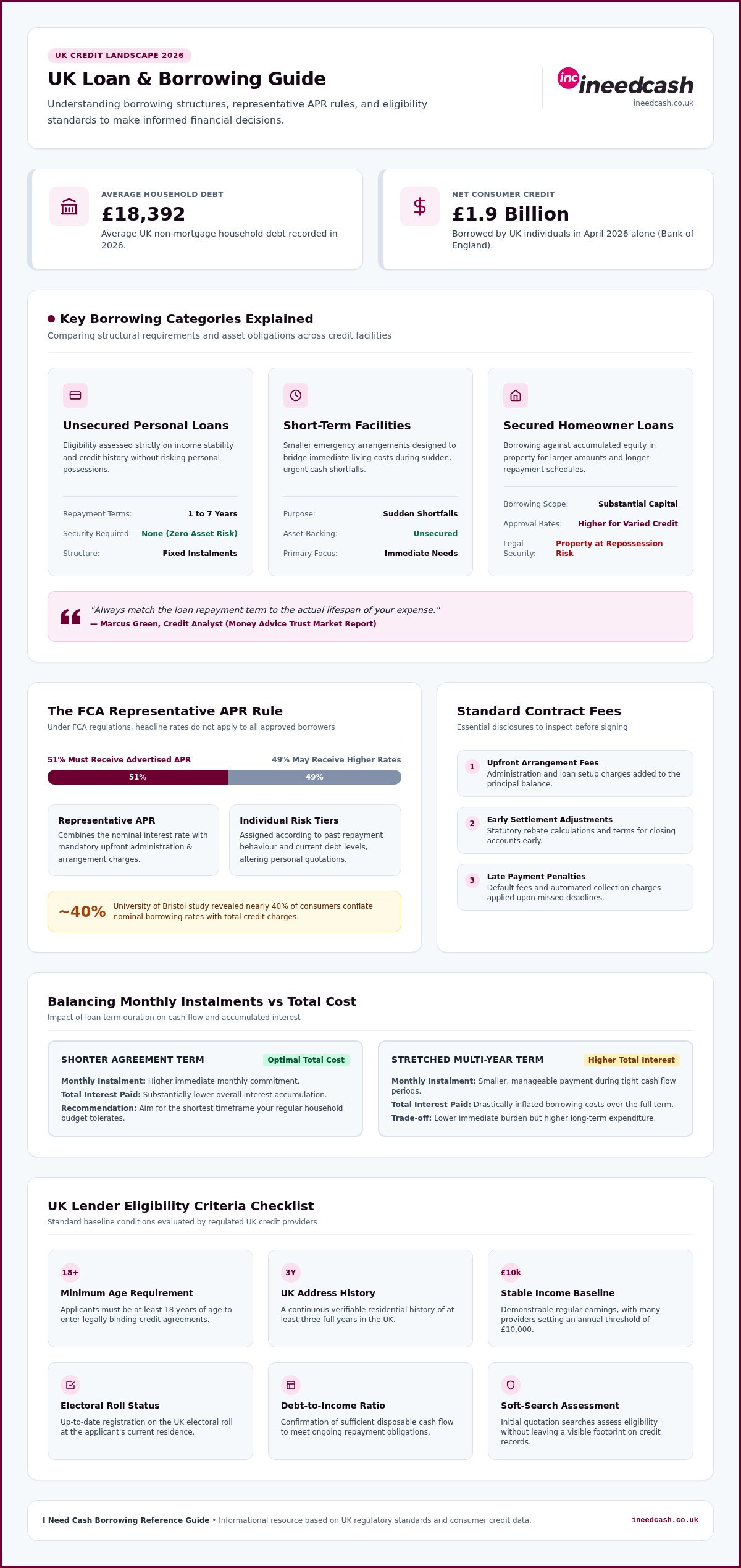
With average UK non-mortgage household debt sitting at roughly £18,392 in 2026, searching for reliable loans shouldn’t feel like a high-stakes gamble with your credit file. High-street bank rejections, confusing representative APR rates, and the dread of lasting credit footprints leave far too many applicants feeling locked out. When you face an urgent expense or want to consolidate existing balances, rigid institutional criteria and automated refusals only make an already stressful situation worse.
You shouldn’t have to guess whether you qualify before making an application. In this complete guide, you will discover how different UK credit options work, assess your true repayment obligations with complete clarity, and uncover tailored borrowing solutions effortlessly. We break down the practical differences between unsecured and secured agreements, explore safe quotation searches that protect your credit rating, and give you the actionable steps needed to borrow with total confidence this year.
Key Takeaways
- Master the differences between secured agreements and unsecured borrowing to protect your personal assets while funding urgent needs.
- Decode representative APR regulations so you can uncover the true cost of credit rather than relying on headline marketing figures.
- Protect your credit score by using soft-search technology to assess eligibility without leaving a visible footprint on your record.
- Discover how accessing an independent nationwide panel helps you secure tailored loans efficiently without paying matching fees.
Understanding the UK Loan Landscape: Key Borrowing Categories Explained
A loan is a legally binding credit agreement where a lender provides capital upfront that you repay with interest over a structured schedule. Many applicants struggle because mainstream high-street banks evaluate applications using rigid automated algorithms. According to Bank of England credit data, UK individuals borrowed £1.9 billion in net consumer credit in April 2026 alone. Understanding different UK loans prevents costly rejections. Prioritise your exact borrowing purpose before choosing between unsecured personal facilities and asset-backed agreements.
Unsecured Personal Loans and Short-Term Cash Solutions
Unsecured agreements assess your eligibility purely on income stability and credit history without risking personal possessions. These flexible unsecured loans offer predictable fixed monthly instalments across one to seven years for planned projects. For sudden, urgent cash shortfalls, smaller emergency facilities like a short-term payday loan help bridge immediate living costs. “Always match the loan repayment term to the actual lifespan of your expense,” notes credit analyst Marcus Green in a Money Advice Trust market report.
Secured Options: Utilising Property Equity with Homeowner Loans
Homeowners can unlock substantial capital by borrowing against the accumulated equity in their property. A specialised homeowner loan provides access to larger borrowing amounts with extended repayment terms. Because lenders hold legal security over the property, approval rates remain higher for varied credit histories. However, failure to maintain agreed monthly payments puts your property at risk of repossession. Always assess long-term affordability across changing economic circumstances before securing debt against your home.
Evaluating the True Cost: Interest Rates, APR, and Terms
Headline borrowing figures rarely tell the complete story. Under Financial Conduct Authority (FCA) regulations, lenders must award their advertised representative Annual Percentage Rate (APR) to at least 51% of successful applicants. The remaining 49% often receive significantly higher rates based on individual risk scoring. Crucially, the nominal annual interest rate only reflects the basic borrowing cost, whereas representative APR combines that rate with mandatory administration fees. Checking these figures helps you understand the total cost of borrowing before signing any agreement.
Demystifying Representative APR and Personal Quotations
Lenders place applicants into distinct risk tiers based on past repayment behaviour and current debt levels. A University of Bristol personal finance study revealed that nearly 40% of consumers conflate nominal borrowing rates with total credit charges. Always inspect standard contract fee disclosures carefully:
- Upfront arrangement and administration fees
- Early settlement adjustments or statutory rebate calculations
- Late payment default penalties and automated collection fees
Balancing Monthly Instalment Affordability Against Total Repayment
Stretching repayment terms across several years shrinks your immediate monthly instalment, but it drastically inflates total interest. A longer agreement keeps monthly living costs manageable during tight cash flow periods, yet you pay far more over time. Aim for the shortest timeframe your regular household budget tolerates. To compare clear repayment structures without damaging your credit profile, you can check your borrowing options online today.
Eligibility Criteria and Protecting Your Credit Score Before Applying
UK lenders enforce strict eligibility baselines before approving applications. You must be at least 18 years old, hold a minimum of three years of verifiable UK address history, and demonstrate stable income, with many providers setting an annual threshold of £10,000. Underwriters evaluate your debt-to-income ratio to confirm you have enough disposable cash flow to meet repayments. Modern open banking loans streamline this process by assessing real-time bank transactions rather than relying solely on historic credit scores.
The Essential Eligibility Checklist Every Regulated Lender Reviews
Regulated lenders evaluate specific indicators to gauge your reliability as a borrower:
- Up-to-date registration on the UK electoral roll at your current residence
- A minimum three-year continuous UK address history
- Verifiable regular monthly earnings from employment, self-employment, or pensions
- A sustainable debt-to-income ratio that leaves sufficient headroom for living essentials
How to Safeguard Your Credit Profile During Your Search
Every full application triggers a hard credit search that leaves a visible mark on your file for twelve months. Submitting multiple applications within a brief window signals financial distress, lowering your credit score and prompting automated rejections across the market. In contrast, soft quotation searches review your eligibility without leaving any mark visible to other lenders. Before requesting quotes, take these immediate steps to optimise your profile:
- Review your credit reports across all major UK agencies to correct outdated addresses or incorrect late marks
- Reduce existing credit card utilisation below 30% of your total assigned limit
- Sever financial associations with former partners linked to inactive joint accounts
To check what you qualify for without harming your credit file, check your eligibility today.
How to Choose and Secure the Right Loan Online Today
Approaching a single high-street lender limits your borrowing choices. If your profile sits slightly outside their narrow automated underwriting rules, an immediate refusal leaves you stranded. Working through an established credit intermediary shifts that dynamic in your favour. Digital credit networks analyse your application against criteria from dozens of competitive UK providers at once. FCA-regulated credit brokers provide completely free matching services for applicants, connecting you directly with lenders actively willing to fund your scenario without charging upfront fees.
Direct Lenders vs Regulated Credit Brokers: Which Route Fits?
Single direct lenders evaluate you against one internal risk model. A regulated broker searches a nationwide panel of independent providers simultaneously through one application. This approach proves invaluable for applicants with past credit blemishes, non-standard income, or complex financial profiles who need inclusive options rather than blanket refusals.
Streamlining Your Online Journey Safely and Responsibly
Modern lending platforms speed up identity checks without requiring physical paperwork or postal delays. Have your details ready to complete the enquiry quickly:
- A valid UK photo ID such as a passport or photocard driving licence
- Active UK current account details for account verification and fund disbursement
- Three years of documented residential address history
- Recent proof of earnings from payslips or verified digital banking access
Once matched with a suitable provider, review the comprehensive Standard European Consumer Credit Information (SECCI) pre-contract document. Verify the APR, monthly repayments, and total payable amount before signing digitally. Take control of your financial journey and get started today.
Take Control of Your Financial Next Steps
Borrowing money shouldn’t feel like an unpredictable gamble with your financial health. By selecting the right borrowing structure for your specific goals, looking beyond introductory representative APR figures, and matching terms to your household budget, you maintain full control over your finances. You don’t have to struggle against rigid high-street criteria or risk multiple search footprints damaging your credit file before you even begin.
Ready to explore borrowing options tailored to your individual circumstances? Accessing an established network of FCA-authorised UK lenders ensures you receive transparent, realistic terms without any guesswork. There is no fee charged to applicants for our matching service, and checking your available loans involves absolutely no impact on your credit score during quotation. Take the stress out of your search and get started with I Need Cash today to secure the reliable financial support you deserve.
Frequently Asked Questions
Can I get a loan in the UK if I have a bad credit score?
Yes, you can secure credit even with past adverse marks or a lower credit score. While high-street banks rely heavily on automated credit cut-offs, specialist UK providers focus primarily on your present affordability and regular disposable income. Using an FCA-regulated broker connects you with inclusive lenders offering bad credit loans, ensuring past financial blunders don’t prevent you from obtaining responsible funding when urgent needs arise.
What is the difference between a secured loan and an unsecured personal loan?
A secured agreement requires collateral, usually equity in your property, whereas an unsecured personal loan relies entirely on your personal creditworthiness and verified earnings. If you default on a secured facility, your home faces potential repossession, though you unlock larger borrowing limits and longer payback terms. Unsecured borrowing carries no direct asset risk, making it an ideal choice for funding everyday expenses or planned household projects.
Will checking my loan eligibility impact my credit score?
Checking your initial eligibility for loans using soft-search technology has zero impact on your credit score. Soft searches allow regulated brokers to match you with suitable providers across an independent panel without leaving footprints visible to third parties. Only you can see these checks on your report. A visible hard search only occurs later when you formally proceed with an individual lender’s contract.
How quickly can funds be deposited into my account once approved?
Once approved, funds can often arrive in your bank account within a few hours or on the same day via Faster Payments. Exact release speeds depend on the individual lender’s verification requirements, your bank’s clearing processes, and the time of day you accept the agreement. Digital platforms using open banking tools streamline these identity checks, significantly accelerating payout timelines for approved borrowers.
What is a representative APR and will I definitely receive that rate?
A representative APR is an advertised benchmark that UK regulations require lenders to give to at least 51% of successful applicants. You won’t definitely receive that exact rate. Underwriters assess your individual risk profile, income level, and credit history to determine your terms. If an applicant has past credit problems, lenders often provide an alternative personal APR tailored to that specific borrowing risk.

Article by
Mandy Paige
Social Content Writer and Blogger
Mandy has been writing for various website for a number of years, especially for companies in the consumer finance industry. She started her career guiding customers wanting help when applying for finance at a Loan Brokerage. Speaking to individuals wanting guidance, it lead her to start writing help and guidance on finding the right solution for their needs. Outside of writing, she is a wiz with a pair of scissors as she originally trained as a hairdresser.
Disclaimer
The content of this article/blog was correct to our knowledge on the date/time it was published.